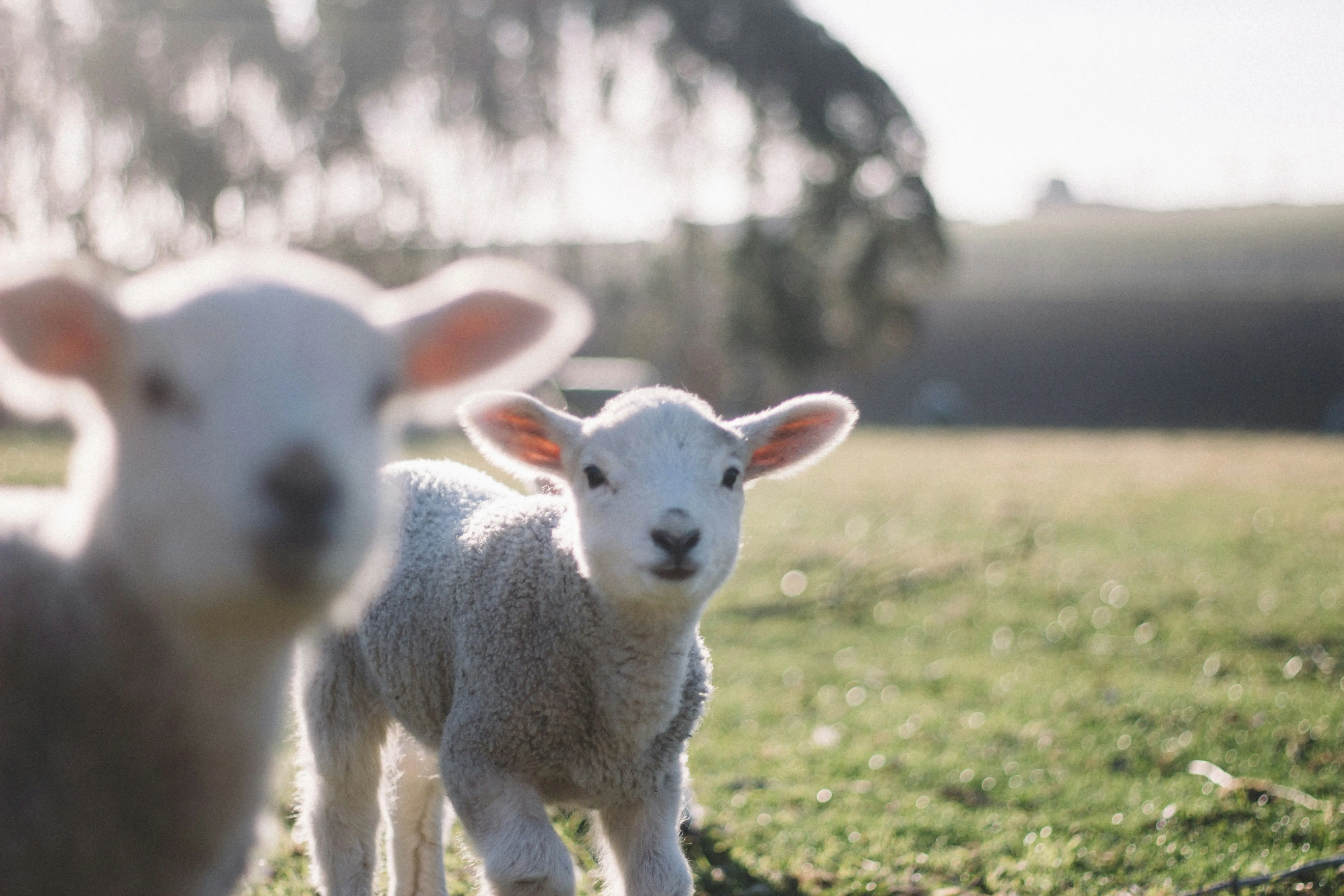
Kosher
Up to 75% of Unstunned Kosher Meat Ends Up in Your Food Chain
By Catherine Blaiklock*
The Slaughter of Animals Act 1933 granted a narrow religious exemption permitting kosher slaughter without stunning for one purpose: the food of Jews. According to a senior figure in the meat processing industry, as little as a quarter of the meat from animals killed under that exemption reaches a kosher consumer. The remainder enters the mainstream British food chain, unlabelled and without legal authority. The Food Standards Agency has admitted in writing, in reply to a letter from Robin Tilbrook written on behalf of the judicial review, that once a slaughterhouse licence is granted, it does not check what method of slaughter is subsequently used.
Sources: Farmers Weekly, 17 August 2022; FSA Slaughter Sector Survey 2022 and 2024; RSPCA; Farm Animal Welfare Council; Gregory et al., Meat Science (2008, 2010, 2012) and Animal Welfare (Cambridge Core, 2023); Temple Grandin, Colorado State University; London Beth Din kashrut guidance; Spengler Neff et al., Section for Agriculture, 2023; Hansard, Food Labelling (Halal and Kosher Meat), 24 February 2026; Conservative Animal Welfare Foundation, Non-Stun Slaughter report, 2021; FSA written response to Robin Tilbrook and Catherine Blaiklock re judicial review, 2026. The Kosher Truth: undercover investigation by Joey Carbstrong, filmed inside British kosher slaughterhouses, removed from YouTube following complaint by one of the facilities documented, now available in full at thekoshertruth.uk
The Legal Framework
The religious exemption permitting kosher slaughter without prior stunning originates in the Slaughter of Animals Act 1933, which exempts animals slaughtered by “the Jewish method for the food of Jews and by a Jew.” The purpose and the boundary are stated in the same nine words. That law was carried forward through the Welfare of Animals (Slaughter or Killing) Regulations 1995 and is currently embodied in the Welfare of Animals at the Time of Killing (England) Regulations 2015 (WATOK 2015), with the kosher exemption set out in Schedule 3. The wording is substantively unchanged across ninety-two years.
Government guidance reinforces the legal boundary: meat produced by non-stun slaughter “must be intended for consumption by Jews or Muslims.” This is not an aspiration. It is the defining condition of the exemption, and the evidence is compelling that it is being systematically breached at scale.
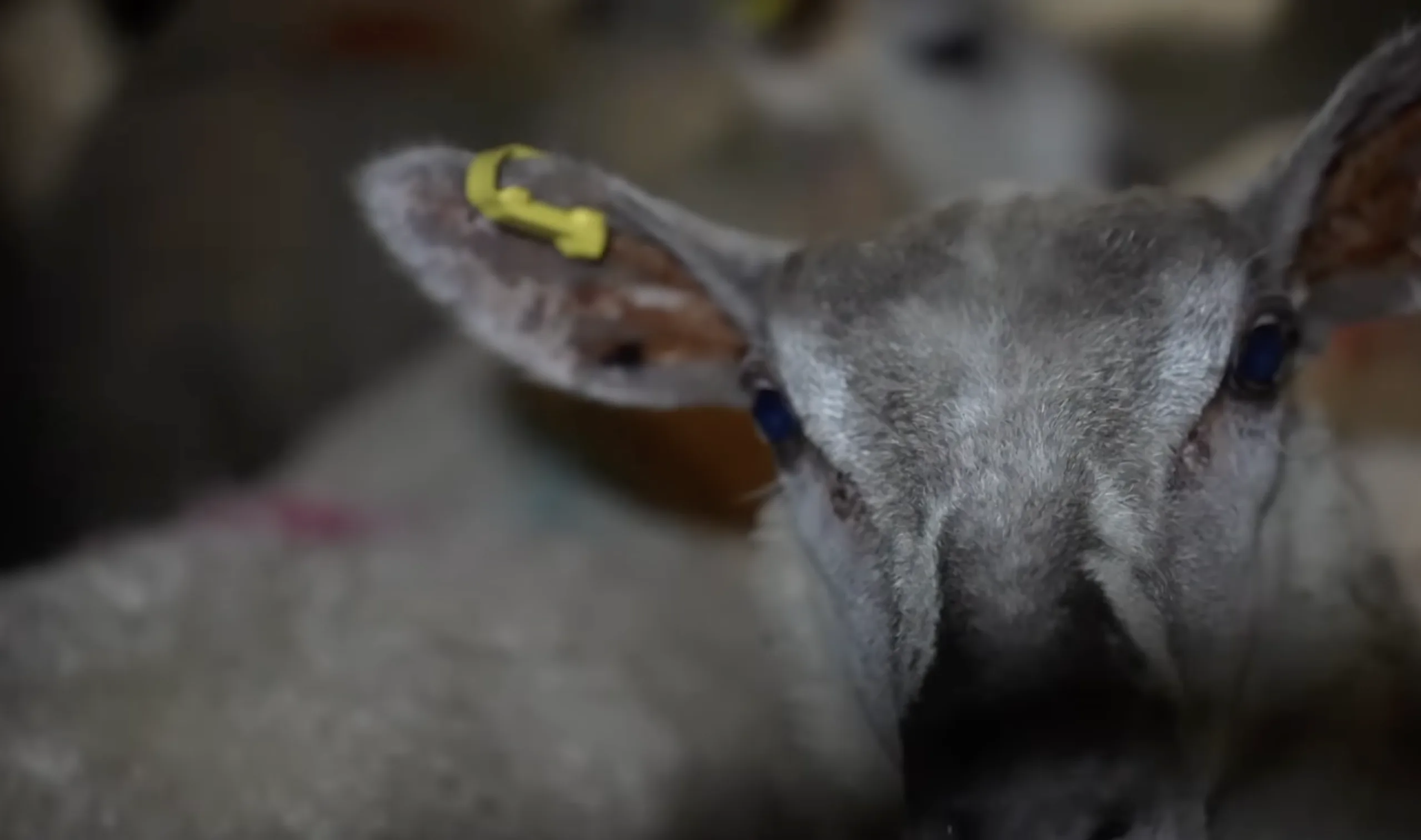
Overview of the slaughter area inside an English halal abattoir
Source: Still from “HALAL SLAUGHTERHOUSE EXPOSED IN ENGLAND (EXTREMELY GRAPHIC)”, Joey Carbstrong / YouTube. Watch on YouTube
Before the Cut: The Lairage Period
The welfare consequences of shechita do not begin at the moment of slaughter. They begin hours earlier. Under UK regulations, specifically WATOK 2015 and the retained Council Regulation (EC) No. 1099/2009, animals must be slaughtered “without unnecessary delay” after arrival, but no specific maximum lairage time is prescribed for cattle and sheep. Animals may be held for many hours in pens cleaned infrequently during operational periods. The floors are wet with the blood, urine and excrement of the animals processed before them. In an active kosher abattoir, cattle and sheep are not merely near the smell of blood. They are standing in it. The animals can see, smell and hear what is happening to those ahead of them in the line.
Cattle have an acute olfactory sensitivity to blood, one of the most powerful fear triggers in the bovine sensory repertoire. Dr Temple Grandin, Professor of Animal Science at Colorado State University and the world's foremost authority on livestock behaviour at slaughter, has studied shechita directly and designed more humane restraint systems specifically for kosher abattoirs in the UK and elsewhere. Her research documents that blood odour causes acute, measurable fear responses in cattle.
A 2023 study found that cattle slaughtered in abattoirs carry twenty times more cortisol, the primary stress hormone, in their blood at the point of death than cattle slaughtered on their home farm. Every animal observed in the abattoir environment in that study was either unsettled or nervous. None were calm.
An animal standing in lairage for hours, smelling the death of those before it, hearing the sounds of the kill floor, is experiencing sustained and measurable terror. It is then driven through the race, the narrow passageway leading to slaughter, into the restraint pen, where it is held immobile and its throat is cut while fully conscious. There is no point in this process at which its suffering is chemically or mechanically alleviated. The exemption granted in 1933 covers the act of slaughter. It says nothing about the hours of documented fear that precede it.
The Method and Its Consequences
Shechita requires that the animal be fully conscious at the moment its throat is cut. A trained slaughterman, the shochet, severs the major blood vessels of the neck with a single sweep of a sharp blade. No mechanical stunning is permitted. The animal remains alive and aware at the point of severance.
The FSA's 2024 Slaughter Sector Survey figures, including a comparison with non-stun halal, are as follows:
| Species | Shechita (kosher) | Non-stun halal |
|---|---|---|
| Cattle | ~51,000 | ~35,000 |
| Sheep | ~3.1 million | ~3.1 million |
| Chickens | ~2.9 million | ~26.7 million |
Source: FSA Slaughter Sector Survey 2024, England and Wales*
Shechita kills more unstunned cattle than non-stun halal. For sheep the figures are identical. This sits awkwardly with the industry's characterisation of kosher volumes as negligible. The government's Farm Animal Welfare Council has concluded that animals slaughtered without prior stunning are likely to experience “very significant pain and distress” before losing consciousness.
When the cut is correctly executed, loss of consciousness in cattle ranges from 15 to 90 seconds (Grandin) or up to two minutes (Farm Animal Welfare Council). Peer-reviewed research across five studies in eight countries, covering more than 1,500 cattle and published in Meat Science and Animal Welfare, documents the frequency and consequences of complications. The central mechanism is the false aneurysm: following severance of the carotid arteries, the vessels retract into their connective tissue sheath, which swells with blood. This partially or fully occludes blood flow to the brain. The animal remains conscious throughout.
The documented rates for non-stun slaughter of cattle, drawn from that research literature, are as follows:
- Large false aneurysms in the carotid arteries: 10% of cattle
- Bilateral false aneurysms (both arteries affected simultaneously): 7%
- Failure to correctly sever a carotid artery: 6% of cases
- Cattle taking 60 seconds or longer to reach final collapse: 8%
- Cattle collapsing and regaining their feet before dying: 14%
- Cattle taking more than four minutes to reach final collapse: 1.5%
- In EEG studies on calves, measurable brain activity recorded 680 seconds (more than eleven minutes) after the cut
Grandin's own published guidance states that any animal failing to lose consciousness within 30 seconds should be immediately stunned as an emergency measure. No mandatory CCTV requirement exists at the point of shechita slaughter in UK kosher abattoirs, and no published data records the frequency with which emergency post-cut stunning is applied in practice.
Why Most Kosher-Slaughtered Meat Never Reaches a Jewish Consumer
There are two reasons why most of the meat from animals killed under the kosher religious exemption ends up in the mainstream food chain rather than on Jewish tables.
The hindquarters
Jewish dietary law prohibits the consumption of the hindquarters of domestic animals, specifically cattle, sheep and goats, unless a specialist procedure known as nikkur (porging) is performed. This requires a trained menakker to excise the sciatic nerve and specific categories of forbidden fat from anatomically complex tissue. The procedure is so technically demanding that it is not carried out in mainstream UK kosher production. The London Beth Din's own published guidance acknowledges this directly: “Because porging is so tricky in the hindquarters of an animal, it is not carried out in most diaspora communities and this part of the animal is sold to the non-Jewish market.”
Every shechita-slaughtered animal in Britain therefore produces a back half, rump, sirloin, fillet, leg of lamb, that cannot enter the kosher food chain. It is sold to mainstream buyers as a routine feature of kosher production, not as an exceptional occurrence.
Post-slaughter rejections
Following slaughter, every carcass undergoes kosher inspection. The standards are exacting: a single bruise, a damaged tendon or bone, or any organ abnormality, most commonly lung adhesions, renders the entire carcass non-kosher. The FSA's 2022 Slaughter Sector Survey, conducted across 161 red meat slaughterhouses between 7 and 13 March 2022, found that 51% of cattle (142 of 276) and 43% of sheep (223 of 520) slaughtered by shechita were rejected on kosher grounds post-slaughter. The 2024 survey recorded lower rates of 25% for cattle and 34% for sheep, though the industry insider's tonnage estimate was based on the 2022 figures. The Farmers Weekly report noted that rejection rates had risen sharply from the 2018 survey, when the figures stood at 15% for cattle and 23% for sheep.
Tonnage Entering the Mainstream Market
A senior official told Farmers Weekly in August 2022 that hindquarter exclusion and post-slaughter rejection together mean as little as one quarter of shechita-slaughtered cattle meat reaches a kosher consumer. Applying that to FSA data gives approximately 12,500 tonnes of beef and 31,000 tonnes of lamb and mutton entering mainstream supply annually from animals killed under an exemption that does not cover this use.
The FSA asked kosher operators where the meat goes. They provided “no meaningful information.” The government does not require this data to be collected.
Shechita UK's director Shimon Cohen disputed this, arguing shechita accounts for just 1% of cattle throughput and surplus goes mostly to halal. “There is more chance of going to the moon for your holidays than eating kosher meat by mistake,” he said. He did not dispute that hindquarters and rejections leave the kosher chain; his position was that the volumes are too small to matter.
The Supply Chain
Meat exits the kosher abattoir through two streams. Hindquarters are split from the carcase at the point of processing and sold immediately to mainstream buyers. Rejected whole carcasses enter the general wholesale market. Farmers Weekly confirmed the primary destination as “buyers, largely in the food-service sector”, where no label is required and no traceability applies.
Named operators have confirmed the practice on the record. Liffey Meats of County Cavan, one of Ireland's principal suppliers of kosher beef to the UK market, killing approximately 600 cattle per week under shechita, confirmed that all surplus is sold to mainstream suppliers in both Ireland and the United Kingdom. John Mutch, managing director of Mutch Meats in Witney, Oxfordshire, told reporters: “I can't afford to throw away half of the beast, so it gets sold into the food chain. I have a business to run here.”
The FSA's survey documentation identifies Smithfield Market, the UK's largest wholesale meat market, as a confirmed distribution point. From Smithfield, product moves to independent butchers, restaurants, food processors and caterers with no further legal obligation to disclose its origin or method of slaughter.
The Enforcement Gap: The FSA's Own Admission
The Slaughter of Animals Act 1933 was enacted when the UK Jewish community numbered in the low hundreds of thousands. The religious exemption it created was a proportionate accommodation of a minority community's dietary requirements. Its terms were clear: the meat was for Jews.
On the evidence set out above, the majority of meat produced under this exemption does not reach a Jewish consumer. The question is what the FSA is doing to enforce the condition.
In the course of preparing the judicial review, Robin Tilbrook wrote to the Food Standards Agency on behalf of our case. In its written reply, the FSA admitted that once a slaughterhouse licence is granted, it does not check what method of slaughter is subsequently used. The licence is issued. The monitoring stops. Whether the exemption is being operated within its legal terms is not verified after the point of licensing.
The FSA is the body responsible for enforcing the exemption conditions. It has confirmed in writing that it does not. This is not a resource failure. It is a regulator that grants permission and then looks away.
In a government consultation on method-of-slaughter labelling, 99% of respondents indicated they believed such labelling should be compulsory. The government has not acted. The Food Labelling (Halal and Kosher Meat) Bill, introduced as a private member's bill by Esther McVey MP in February 2026, would require mandatory labelling. The bill has no government backing and no realistic legislative path.
The exemption created in 1933 bears no relationship, in scale or destination, to the purpose for which it was granted.
The Kosher Truth*, an undercover investigation by Joey Carbstrong filmed inside British kosher slaughterhouses, was published on YouTube and subsequently removed following a complaint by one of the facilities documented. It is available in full at thekoshertruth.uk.
Cohen's Claim That the Surplus Goes to Halal: Why It Does Not Hold
Shimon Cohen of Shechita UK argued that surplus kosher meat goes “mostly” to the halal market, which would at least partly address the legal problem since halal consumers are Muslims, covered by the other religious exemption. The argument is legally inadequate for a simple reason.
Shechita and non-stun halal slaughter are mechanically almost identical. Both involve a single cut to the throat of a conscious animal, and several UK and Irish abattoirs conduct both on the same premises. When a carcass is rejected post-shechita, it carries no physical marker, and if the abattoir also holds halal certification, that carcass can be routed into the halal stream. Farmers Weekly confirms this directly: rejected kosher carcasses “were then sold as halal or to the wider public”. There is no legal prohibition on this, no disclosure requirement, and no one checking.
But even if one accepts that the meat reaches halal consumers, it does not satisfy the halal exemption. The 1933 Act permits slaughter without stunning by the Muslim method for the food of Muslims and by a Muslim. A carcass slaughtered by a shochet, a Jewish slaughterman, was not slaughtered by a Muslim or by the Muslim method. Selling it subsequently to a halal wholesaler does not change the circumstances of its slaughter. It falls outside both exemptions. Neither covers it.
Cohen also argued that shechita accounts for just 1% of cattle throughput and the volumes are therefore negligible. The scale of a breach does not determine its legality, and as the tonnage figures above show, the volumes are not negligible. Farmers Weekly itself does not confine the destination to halal: the meat was sold “as halal or to the wider public,” with hindquarters going “largely in the food-service sector.”
The Overproduction Problem
Muslims and Jews together constitute approximately 7% of the population of England and Wales. The FSA's 2024 slaughter figures by method are as follows:
| Species | Stunned halal | Non-stun halal | Shechita (kosher) |
|---|---|---|---|
| Cattle | ~350,000 | ~35,000 | ~51,000 |
| Sheep | ~5.7 million | ~3.1 million | ~3.1 million |
| Chickens | ~200 million | ~26.7 million | ~2.9 million |
Source: FSA Slaughter Sector Survey 2024, England and Wales.*
For cattle, shechita slaughters more unstunned animals than non-stun halal. For sheep the figures are identical. The parliamentary record of February 2026 confirms that non-stun production runs at about four times the level that the Muslim and Jewish communities could consume. The Conservative Animal Welfare Foundation calculated the oversupply at a minimum of 60%, and as much as 150% on more reasonable assumptions. The legal consequence is straightforward: every animal slaughtered beyond what the faith communities can consume is slaughtered outside the legal authority of the exemption. With kosher, three quarters of shechita meat cannot stay within the kosher chain by definition. The halal abuse is one of scale. Both breach the same condition in the same law.
This is not a matter of religious freedom. It is a matter of whether a legal exemption granted for a defined purpose is being operated within the bounds of that purpose. The evidence, from government figures, parliamentary analysis and academic research, is that it is not.
Sources
Source list
- Farmers Weekly, 17 August 2022
- FSA Slaughter Sector Survey 2022 and 2024
- RSPCA
- Farm Animal Welfare Council
- Gregory et al., Meat Science (2008, 2010, 2012) and Animal Welfare (Cambridge Core, 2023)
- Temple Grandin, Colorado State University
- London Beth Din kashrut guidance
- Spengler Neff et al., Section for Agriculture, 2023
- Hansard, Food Labelling (Halal and Kosher Meat), 24 February 2026
- Conservative Animal Welfare Foundation, Non-Stun Slaughter report, 2021
- FSA written response to Robin Tilbrook and Catherine Blaiklock re judicial review, 2026
- The Kosher Truth: undercover investigation by Joey Carbstrong, filmed inside British kosher slaughterhouses, removed from YouTube following complaint by one of the facilities documented, now available in full at thekoshertruth.uk