The legal basis
Halal Meat UK: The Law and Legal Letters
The judicial review focuses on the religious slaughter exemption, how it is being used, and how that connects to supply across the wider market.
The Act
The campaign centres on the religious slaughter exemption in the Slaughter of Animals Act 1933. The general rule requires animals to be rendered insensible to pain before death, while the exemption allows religious slaughter by specified communities for their own food.
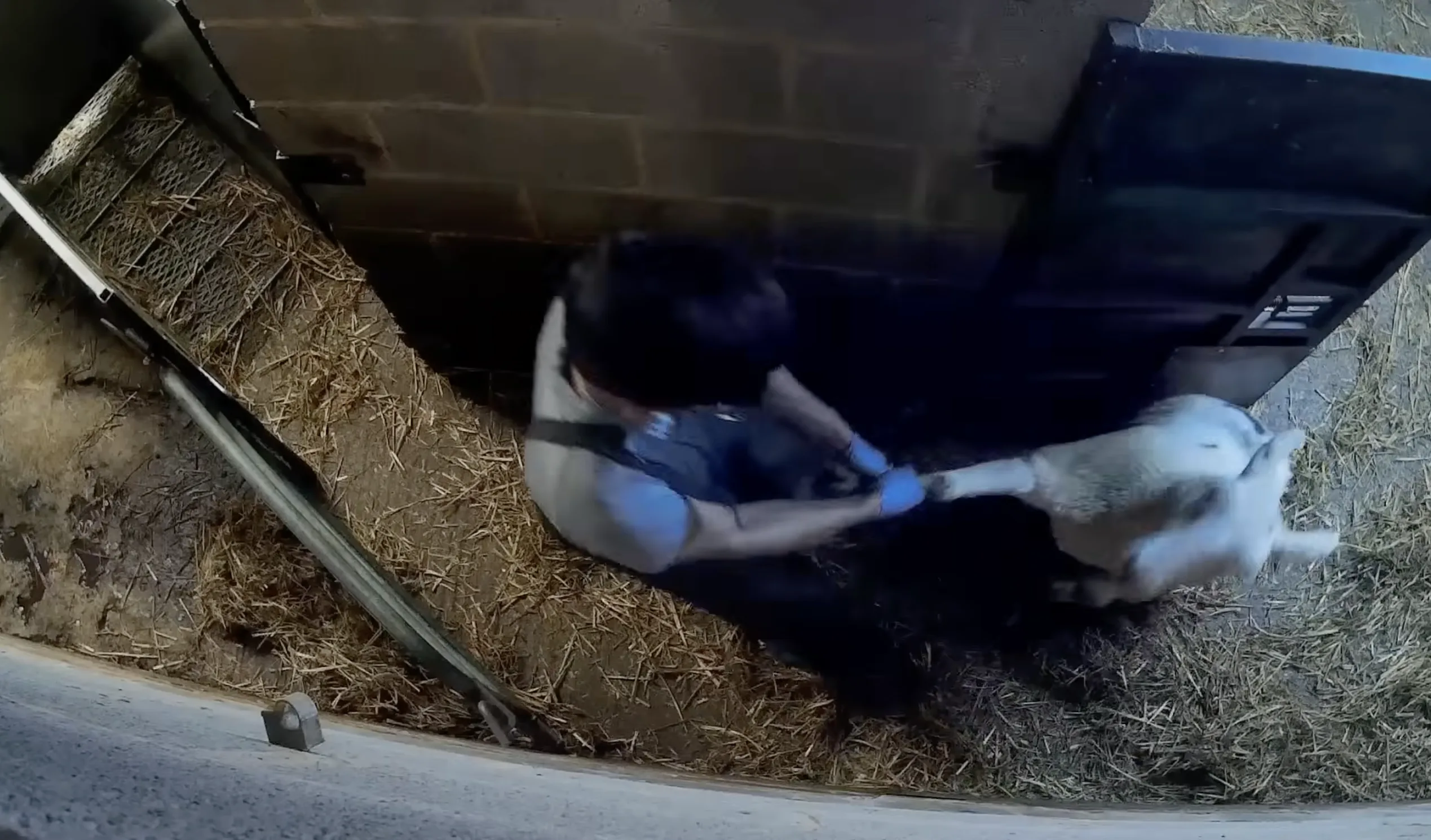
Workers forcing sheep through a slaughterhouse pen and restraint area
Source: Still from “HALAL SLAUGHTERHOUSE EXPOSED IN ENGLAND (EXTREMELY GRAPHIC)”, Joey Carbstrong / YouTube. Watch on YouTube
The abuse of it
The concern is that meat produced under a religious exemption is being sold and served much more widely, including to people who are not seeking religiously slaughtered meat and may not know they are being served it.
Robin's Letters
Legal correspondence with councils and the Food Standards Agency, in date order. Each letter is embedded below as page images.
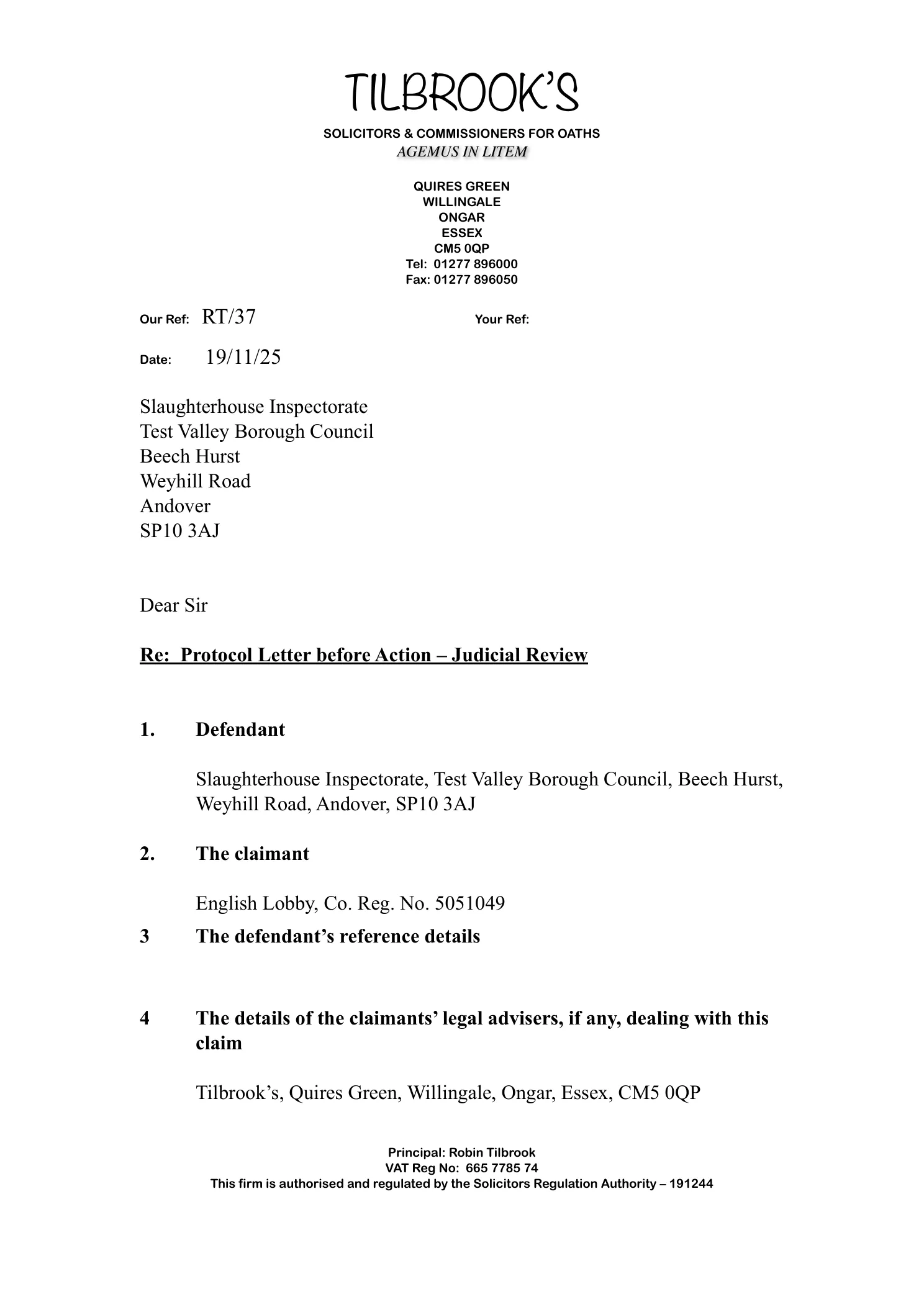
Test Valley Borough Council
Letter Before Action — 19 November 2025
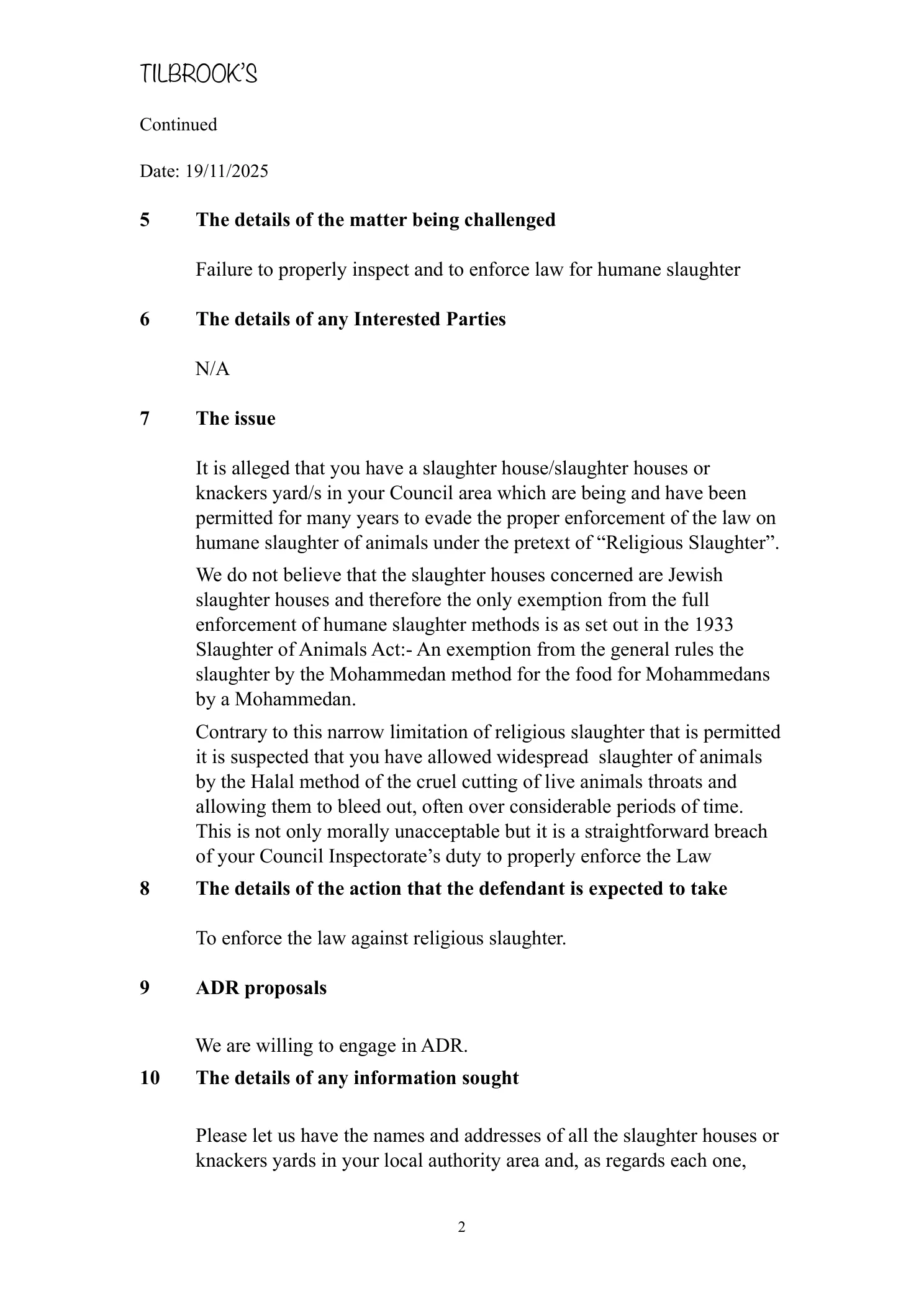
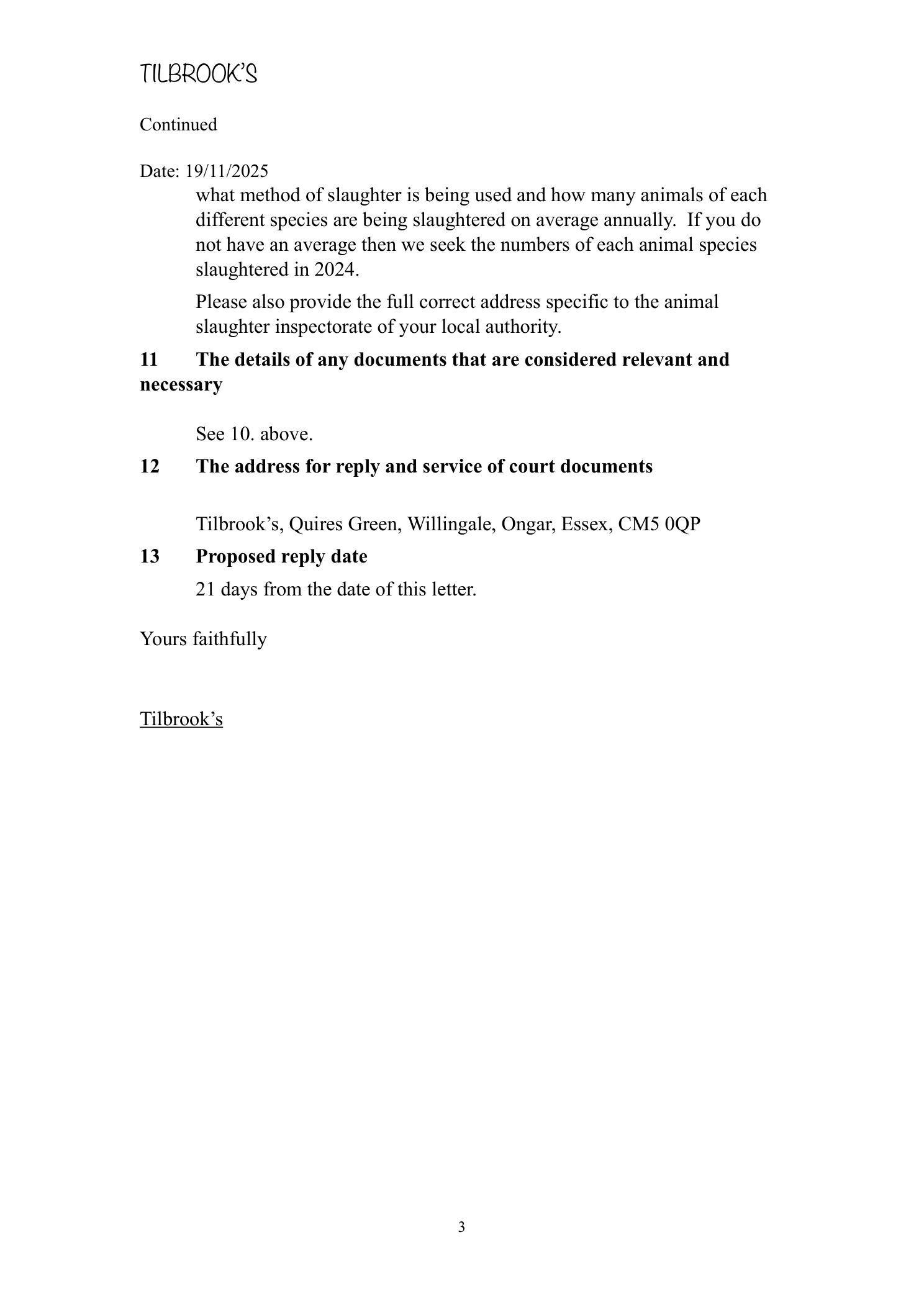
East Suffolk Council
Letter Before Action — 21 November 2025
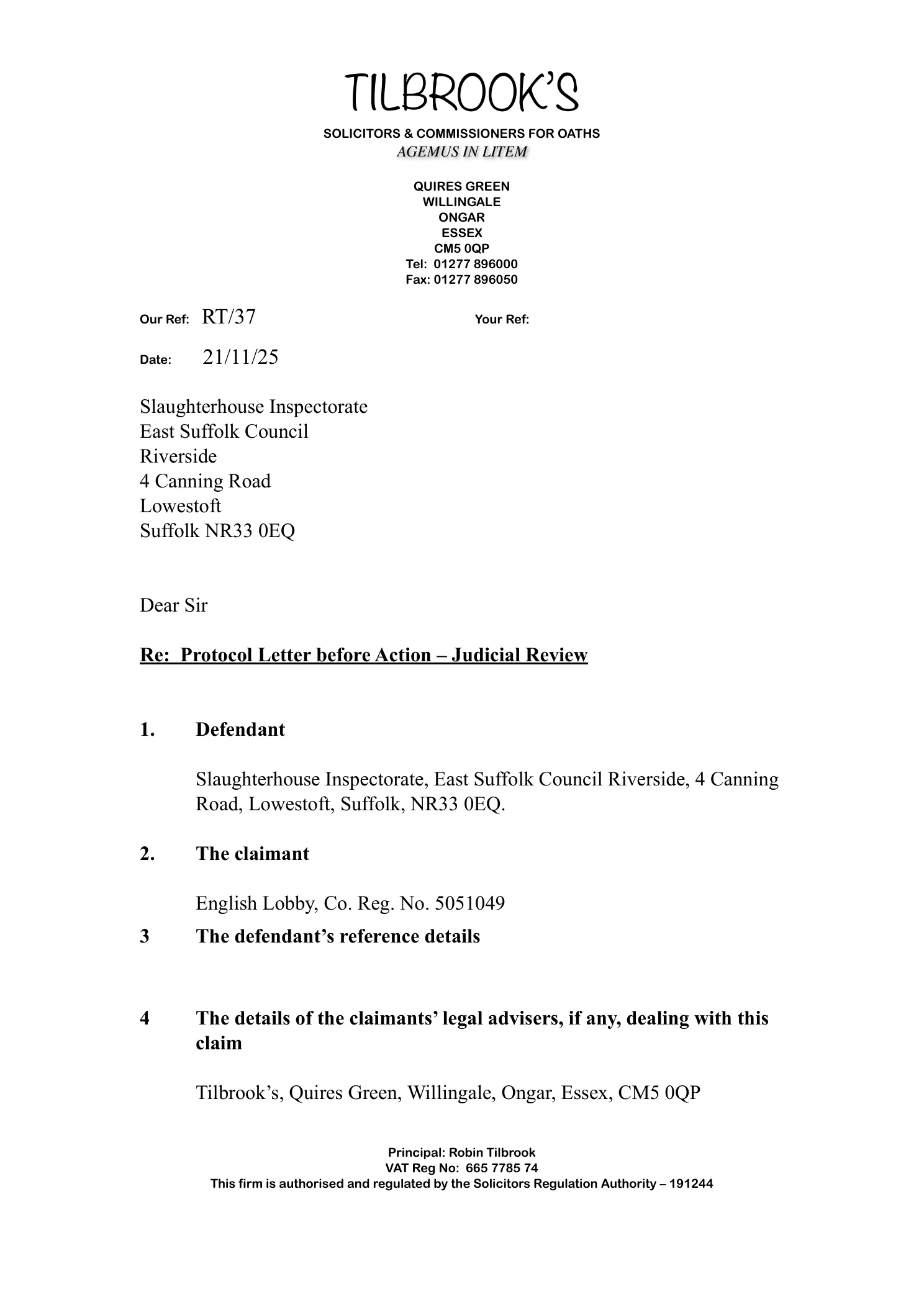
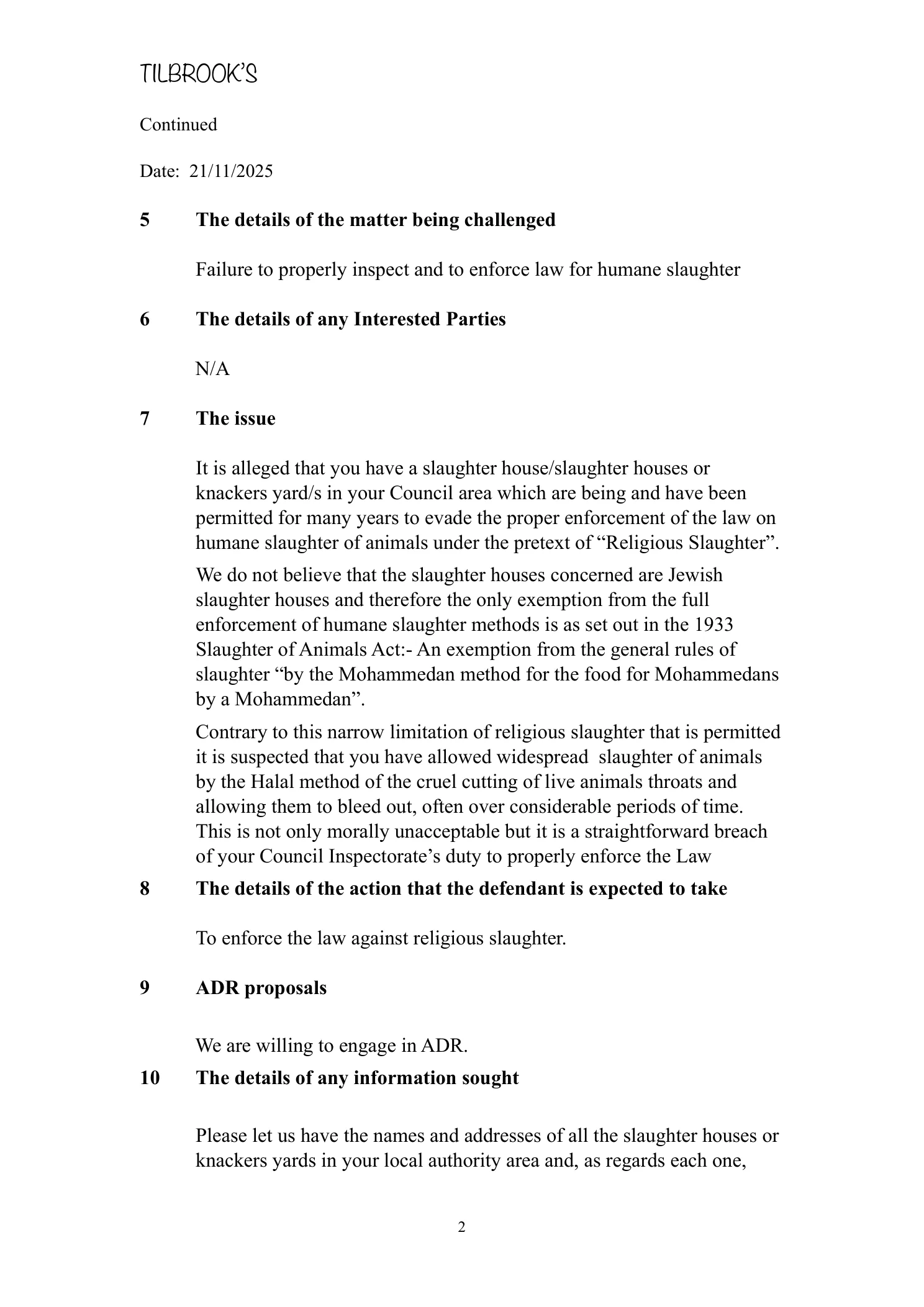
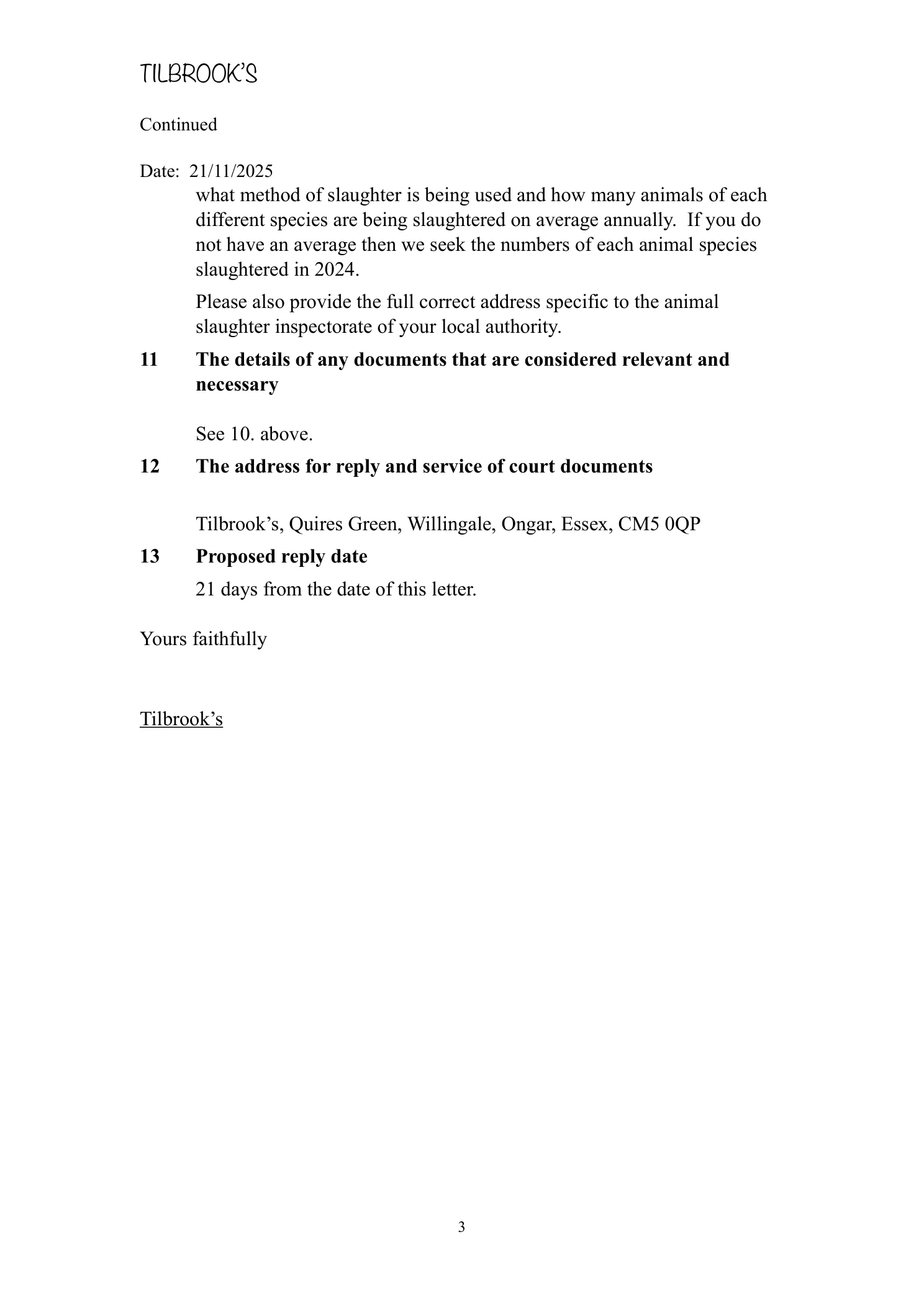
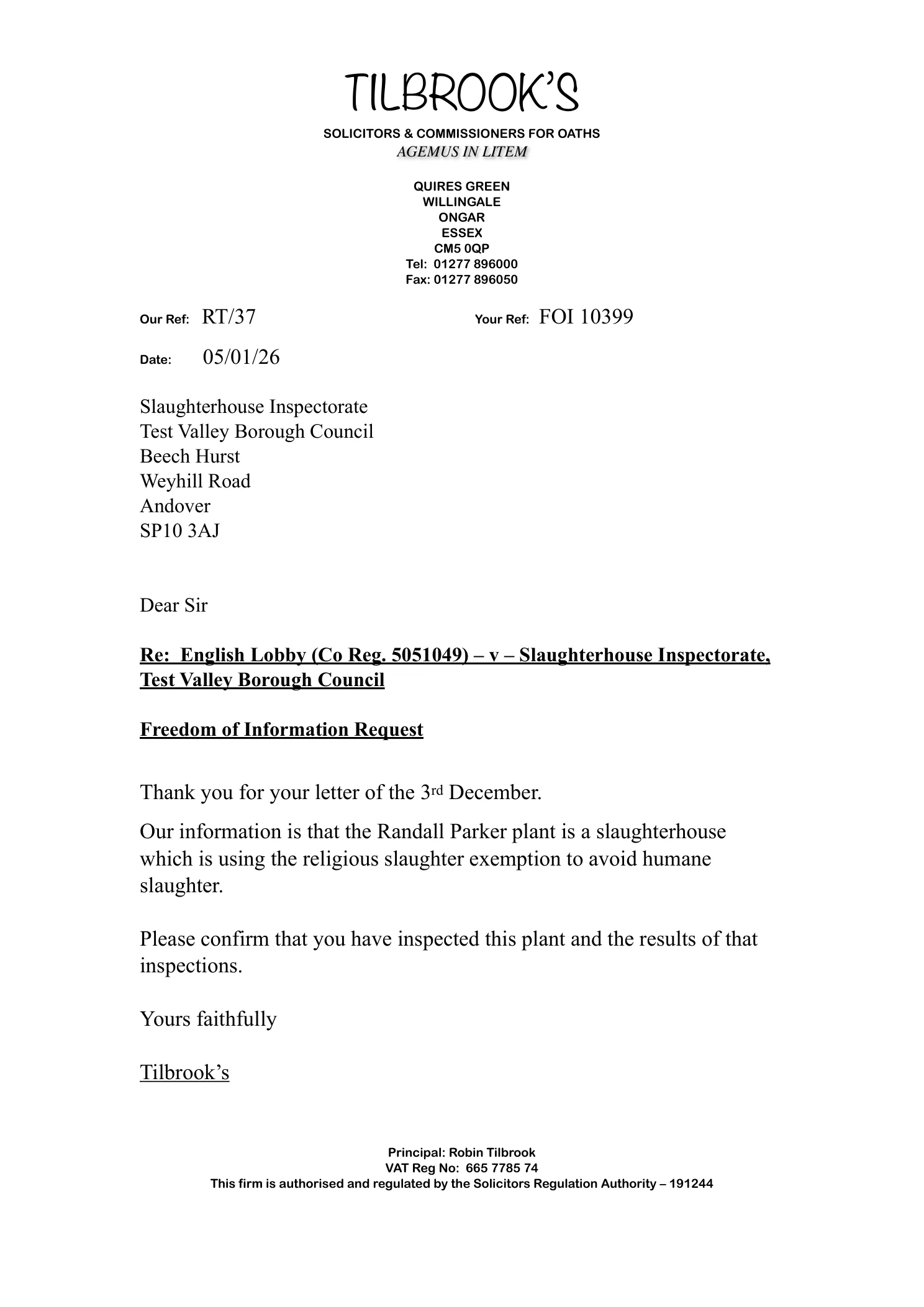
Test Valley Borough Council
Follow-up — 5 January 2026
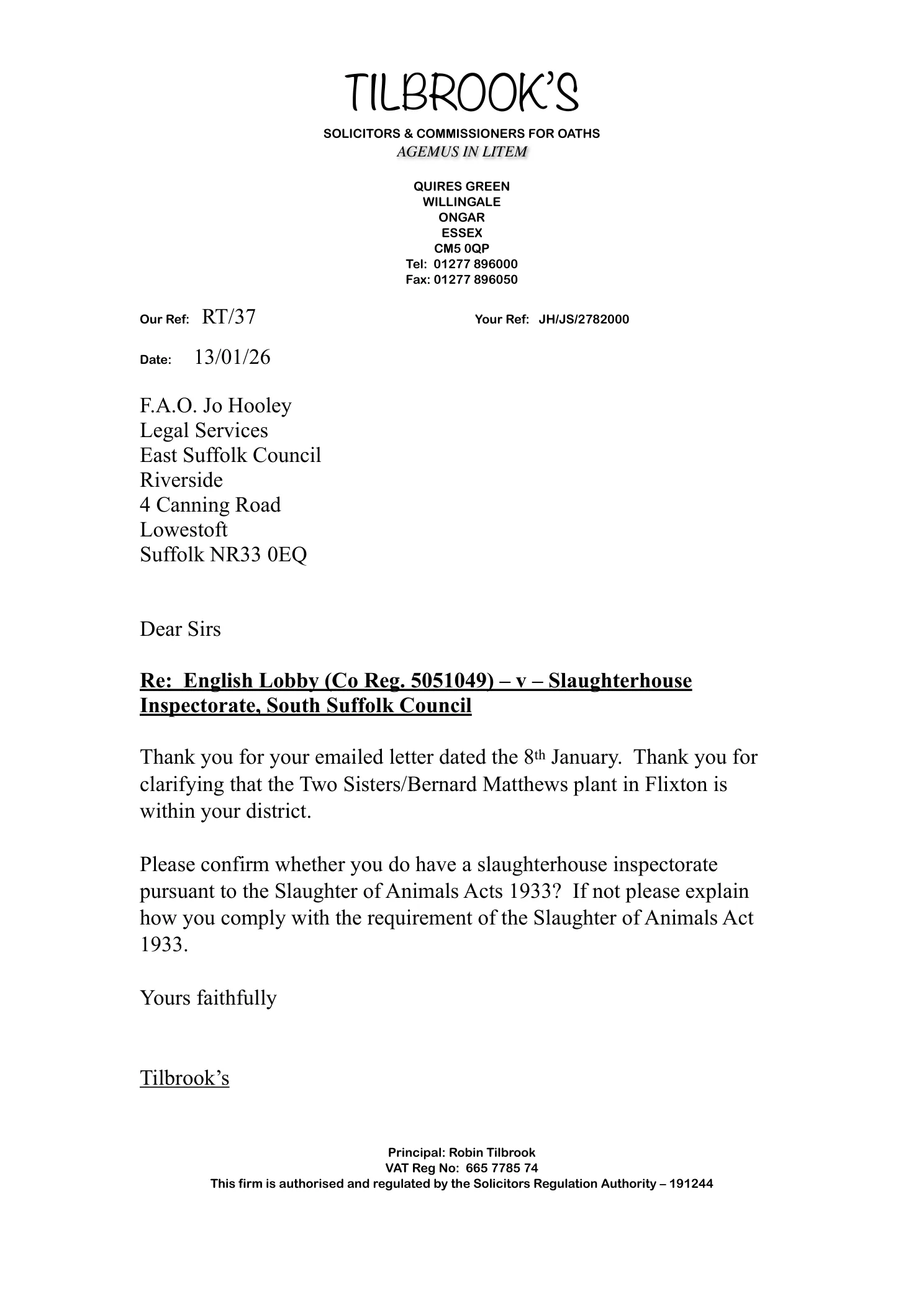
East Suffolk Council
Follow-up correspondence
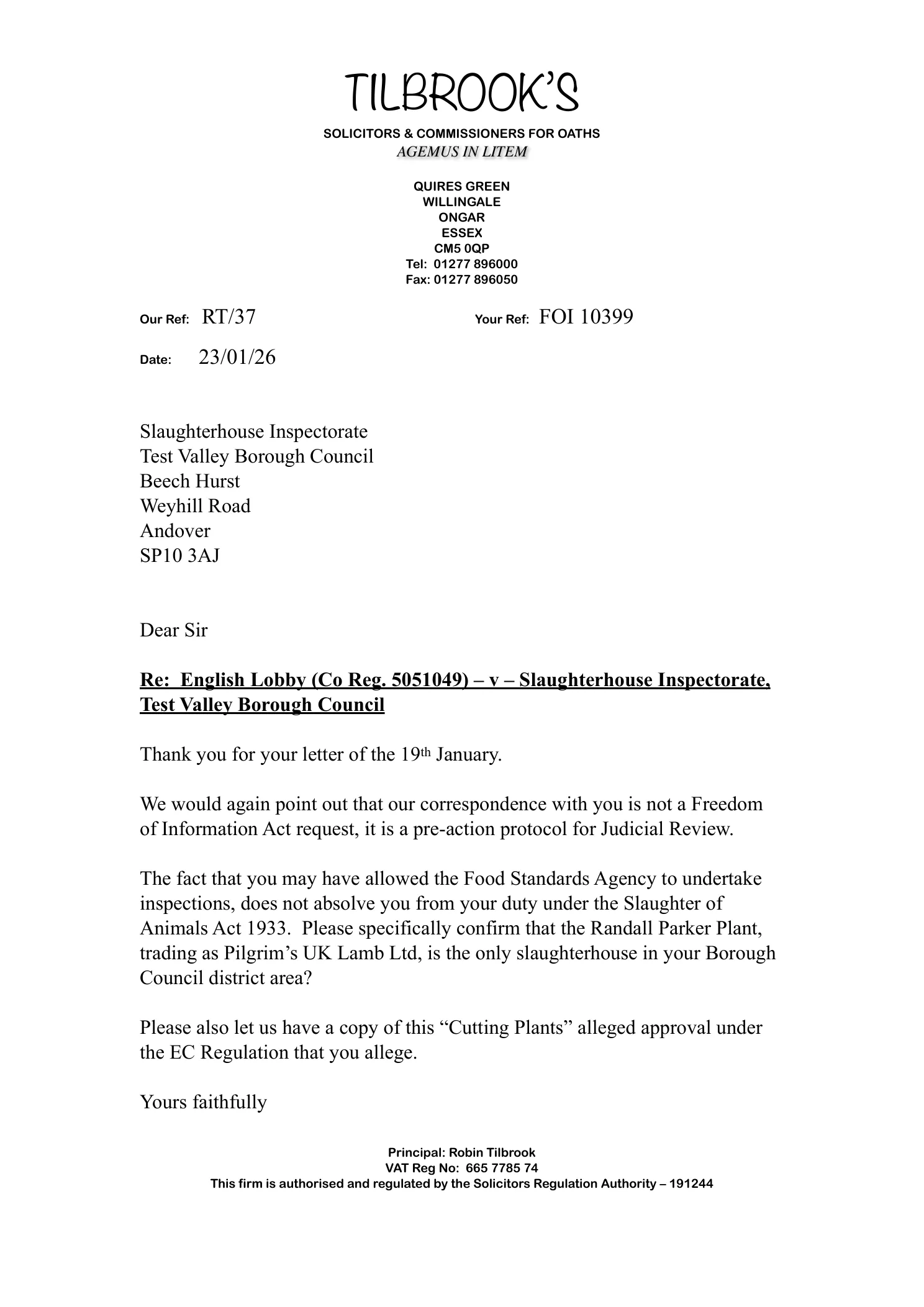
Test Valley Borough Council
Follow-up — 23 January 2026

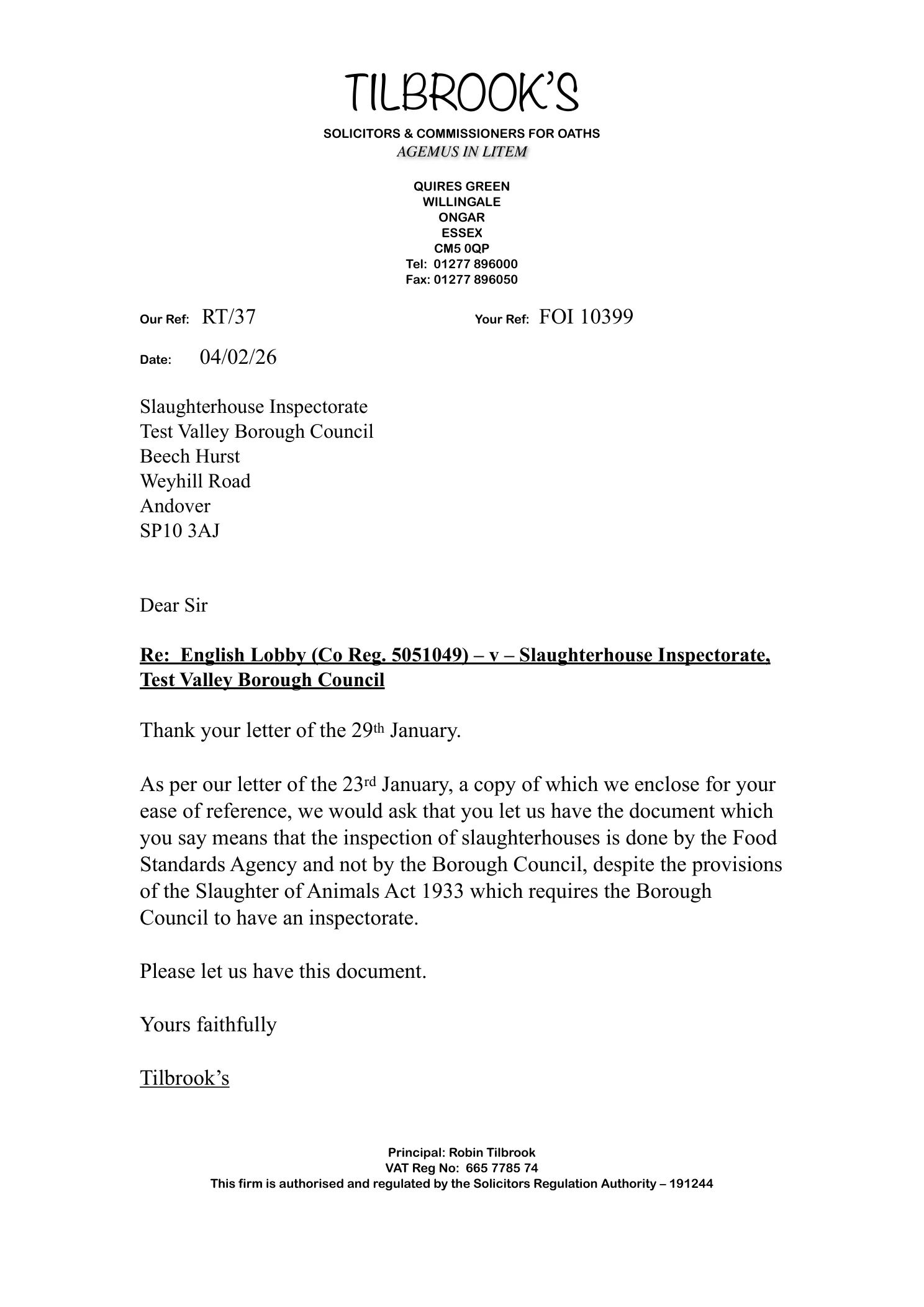
Test Valley Borough Council
Follow-up — 4 February 2026
Food Standards Agency
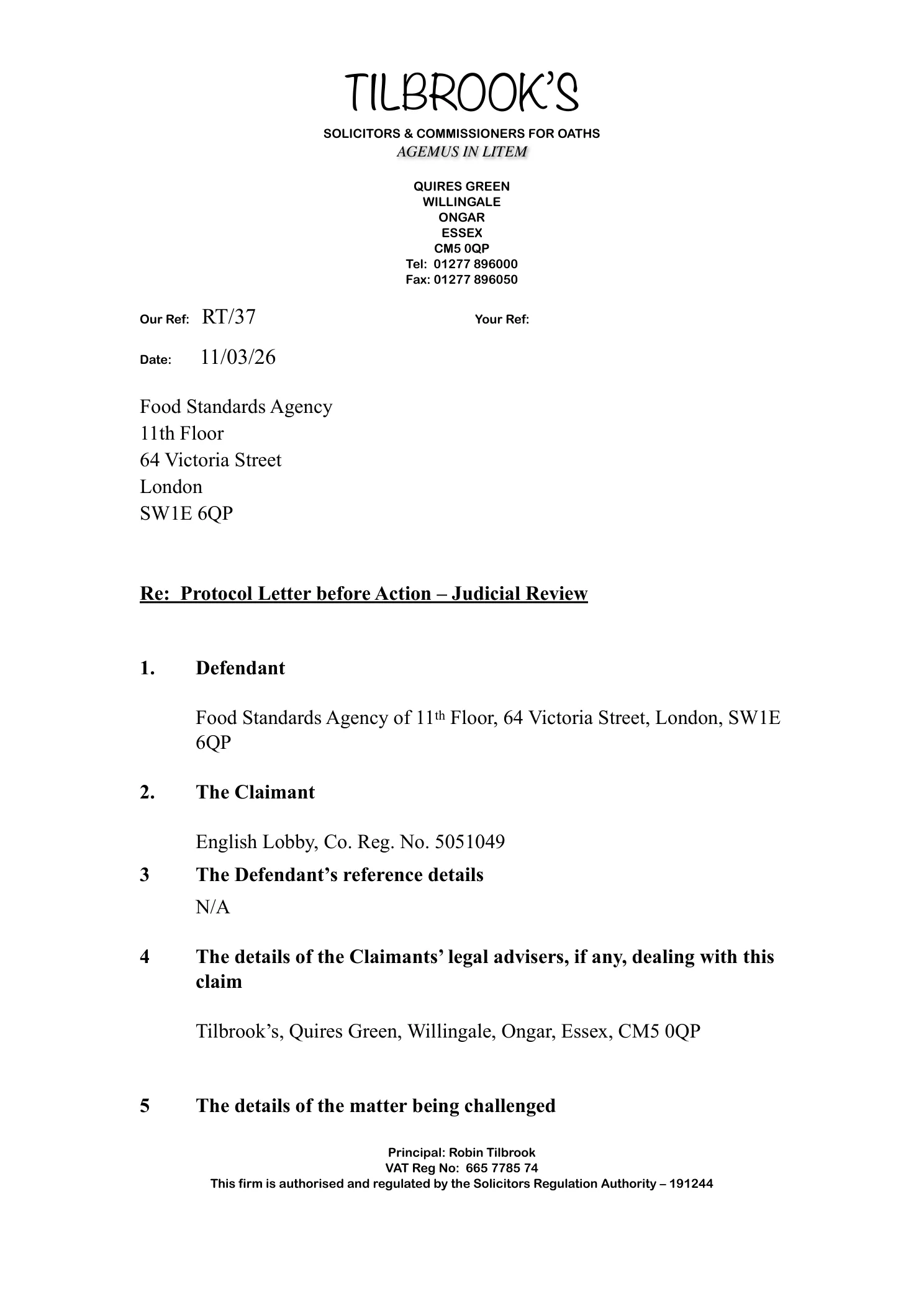
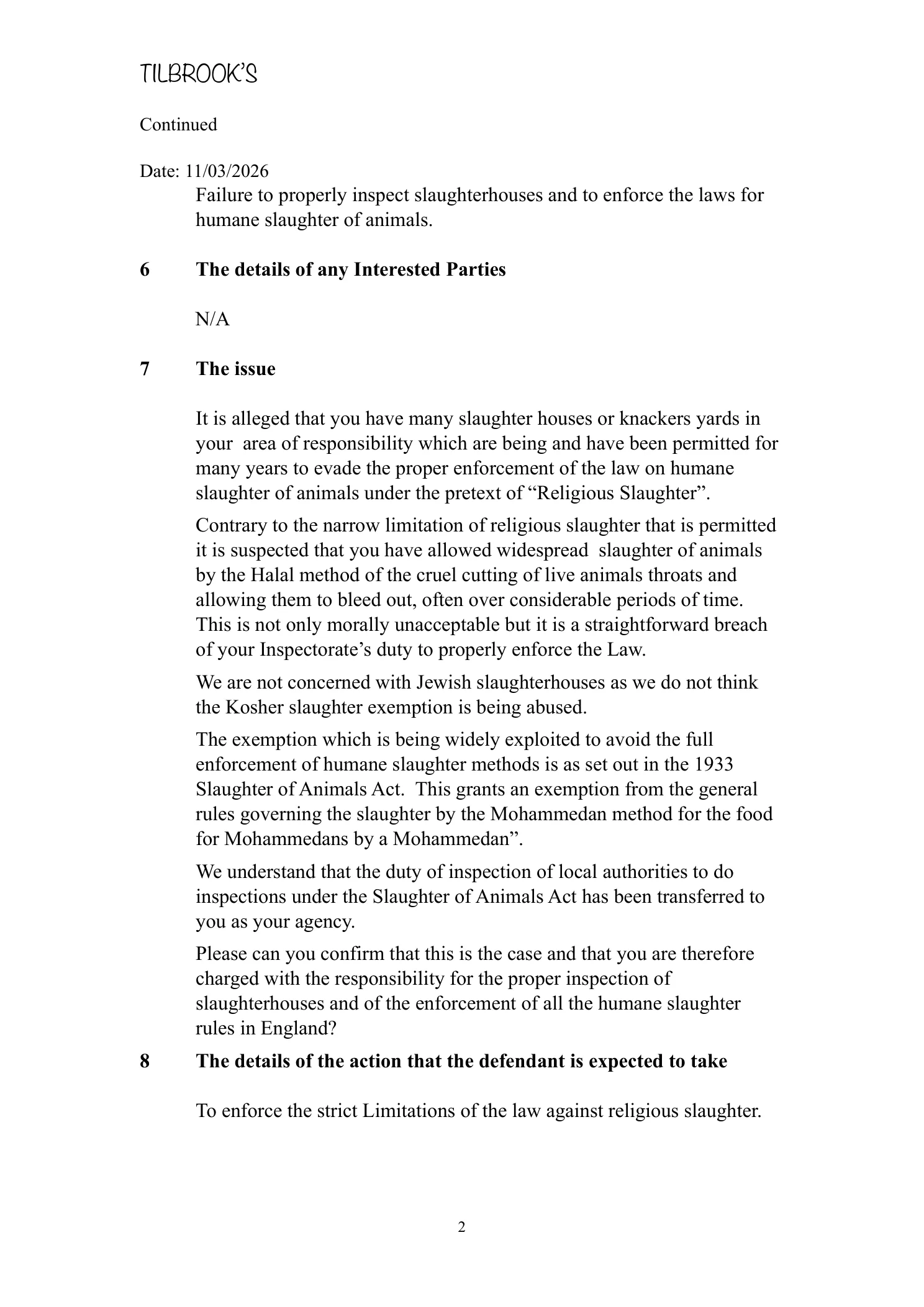
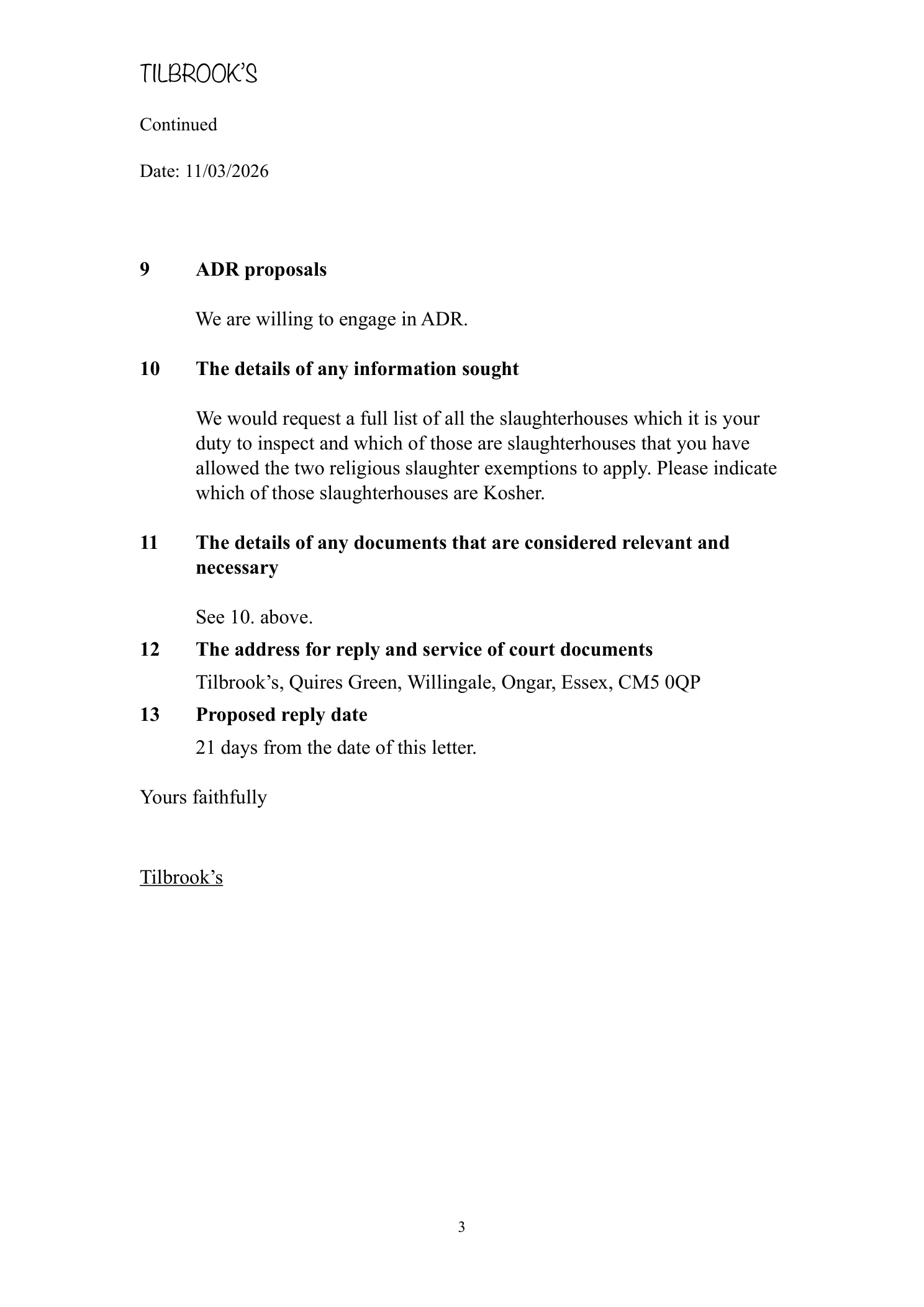
Letter Before Action — 11 March 2026
Food Standards Agency
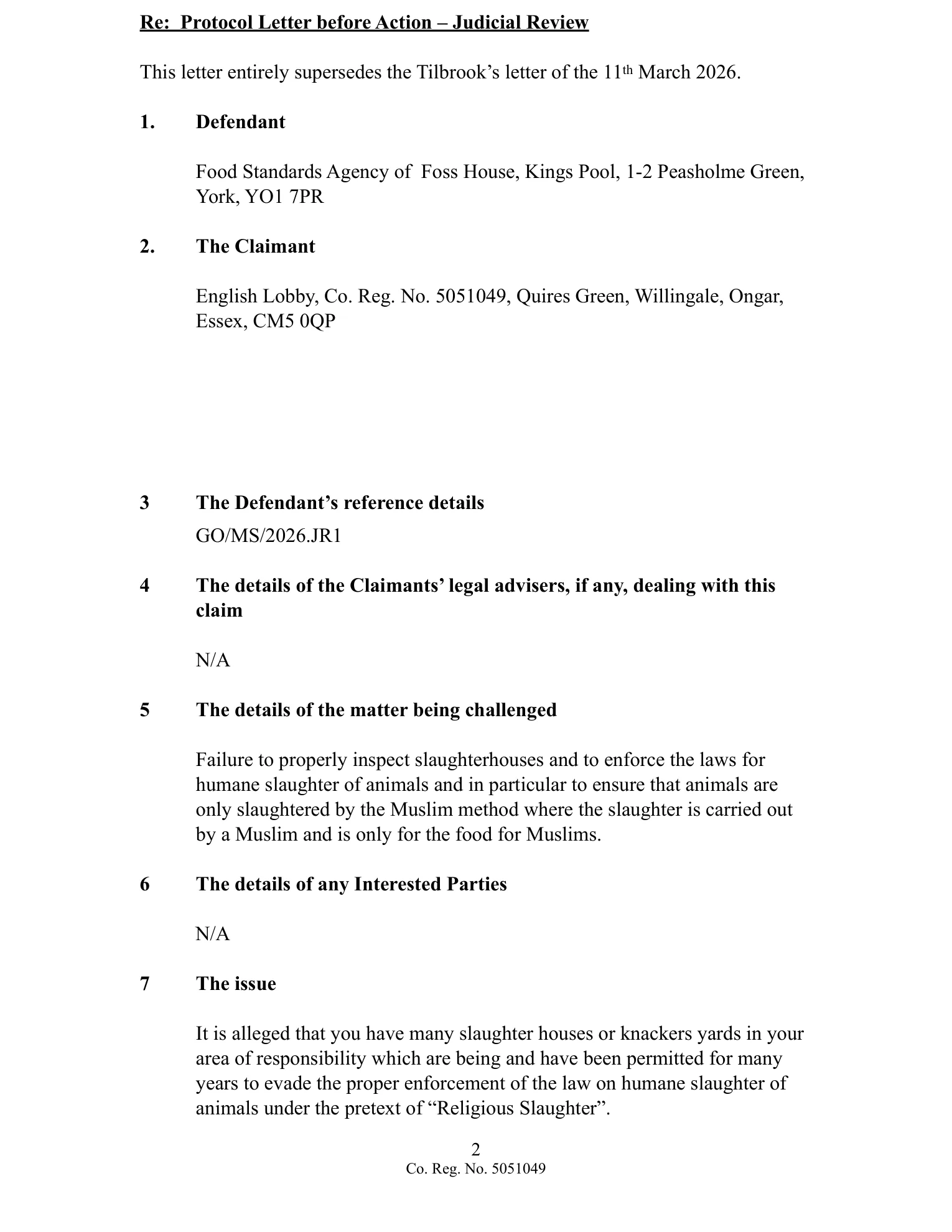
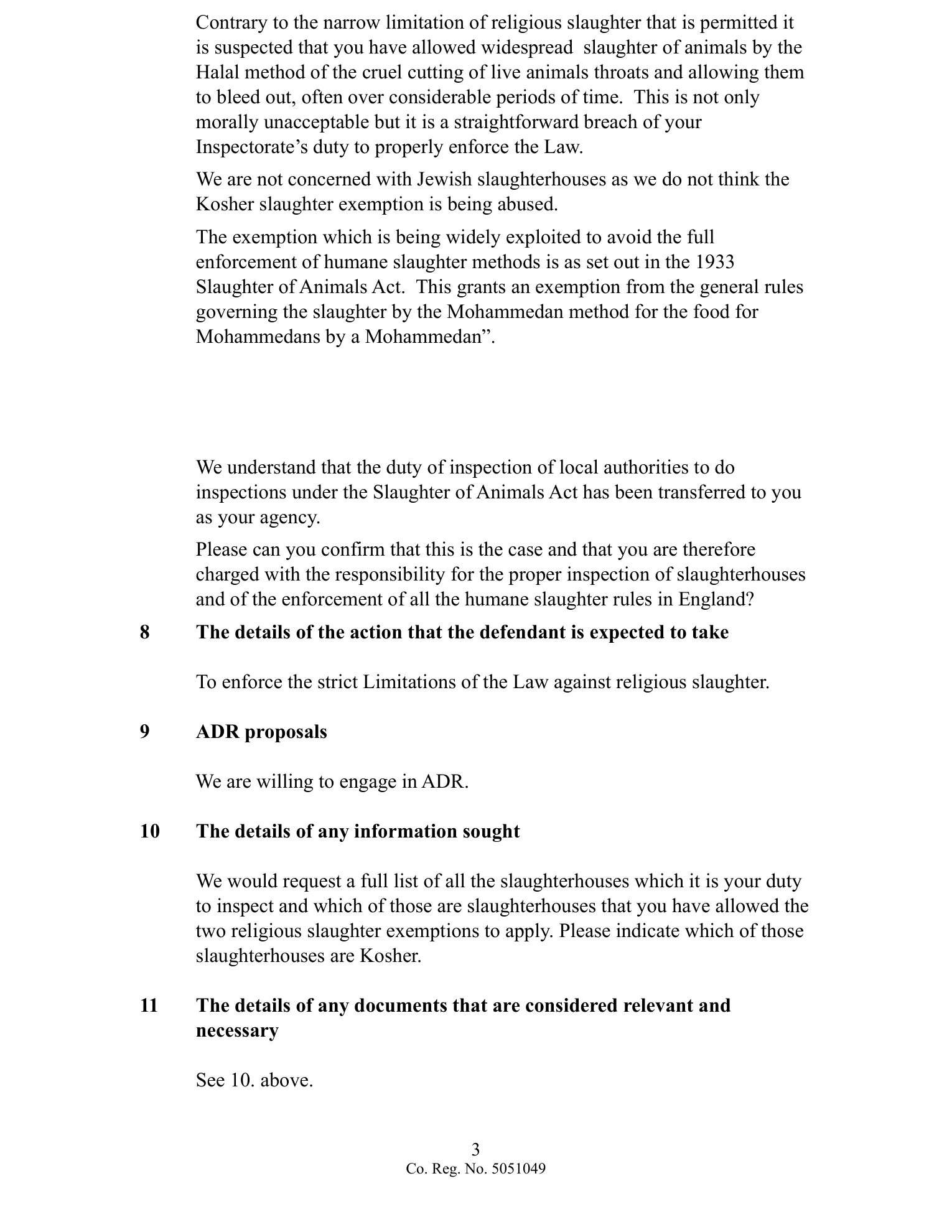
1 April 2026
Food Standards Agency
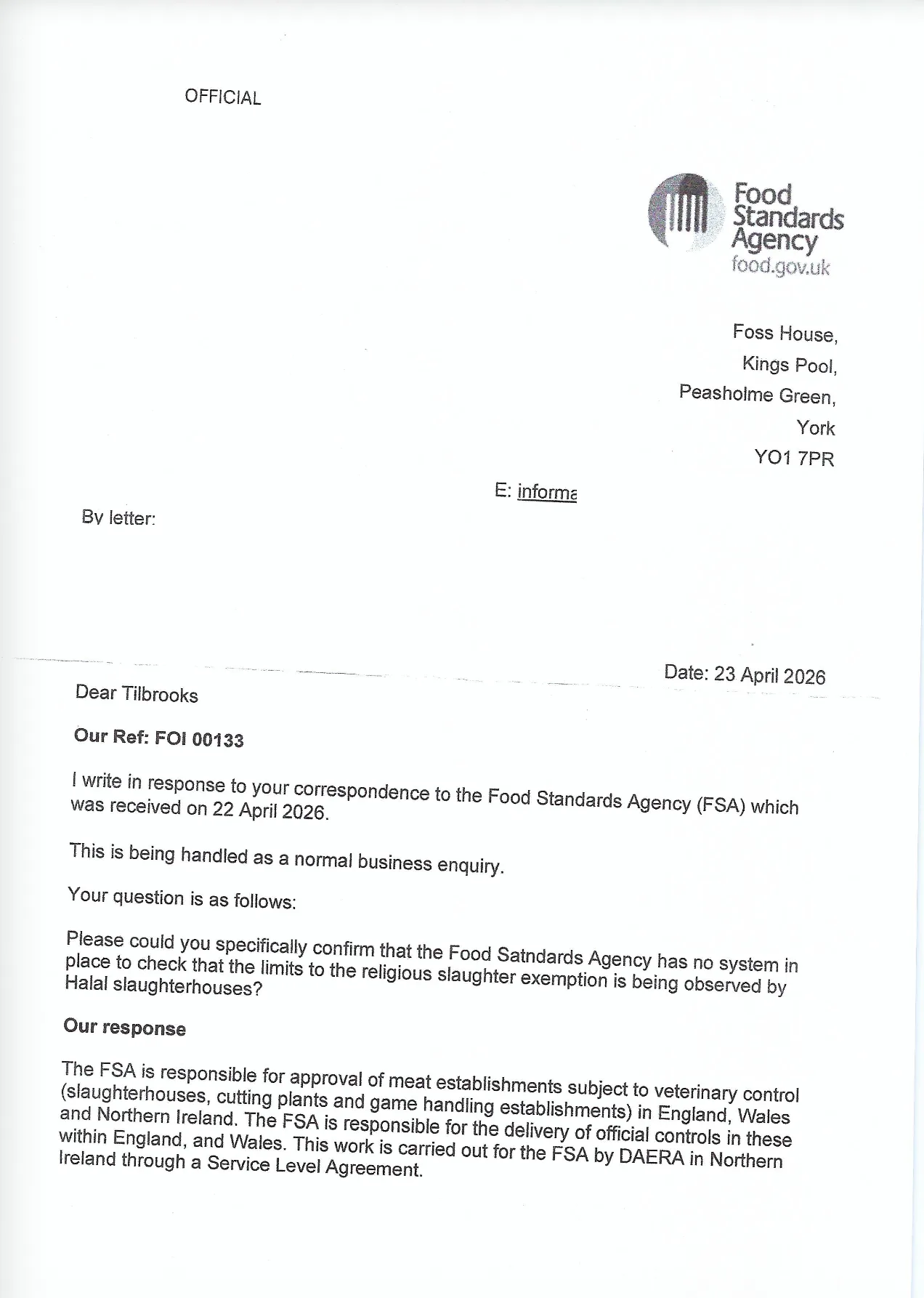
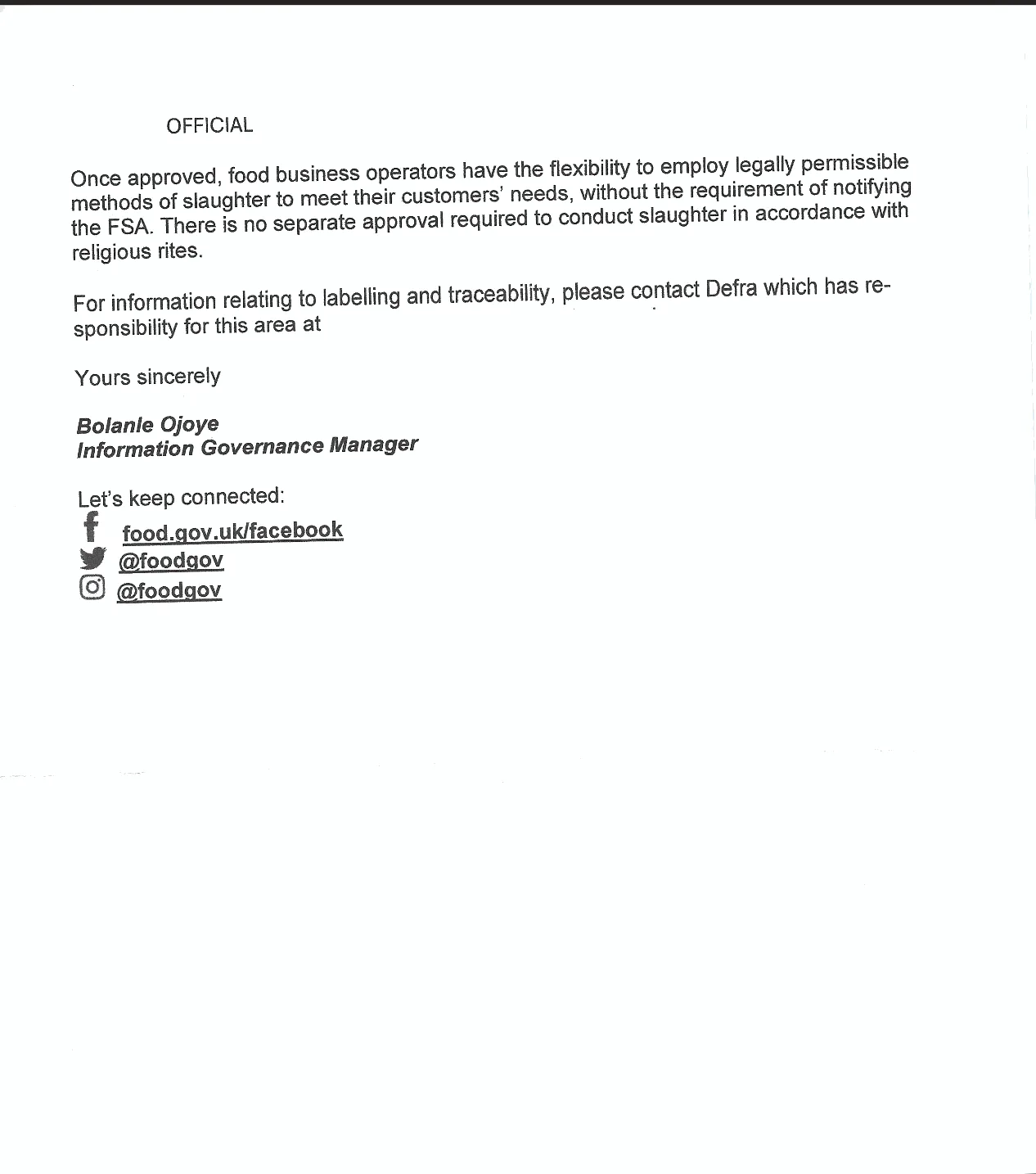
Further response — 23 April 2026
The response says: "Once approved, food business operators have the flexibility to employ legally permissible methods of slaughter to meet their customers needs, without the requirement of notifying the FSA. There is no separate approval required to conduct slaughter in accordance with religious rights."
Why proceed with the judicial review
This section will use the campaign wording from the fundraising page to explain why a judicial review is being pursued and what legal question it is intended to resolve.
The Slaughter of Animals Act 1933
Exact wording of the religious exemption
The general rule of the Act requires that:
No animal shall, in a slaughterhouse or knacker's yard, be slaughtered otherwise than instantaneously by means of a mechanically-operated instrument in proper repair unless — by stunning, effected by means of a mechanically-operated instrument or an instrument for stunning by means of electricity, being in either case an instrument in proper repair, it is instantaneously rendered insensible to pain until death supervenes.
The religious exemption then carves out both communities in the same subsection:
Subsection (1) above shall not apply to the slaughter, without the infliction of unnecessary suffering, of an animal —
(i) by the Jewish method for the food of Jews and by a Jew duly licensed for the purpose by the Rabbinical Commission referred to in Schedule 1 to this Act; or
(ii) by the Mohammedan method for the food of Mohammedans and by a Mohammedan.
Sandwiches on trains (Tiffin Sandwiches)
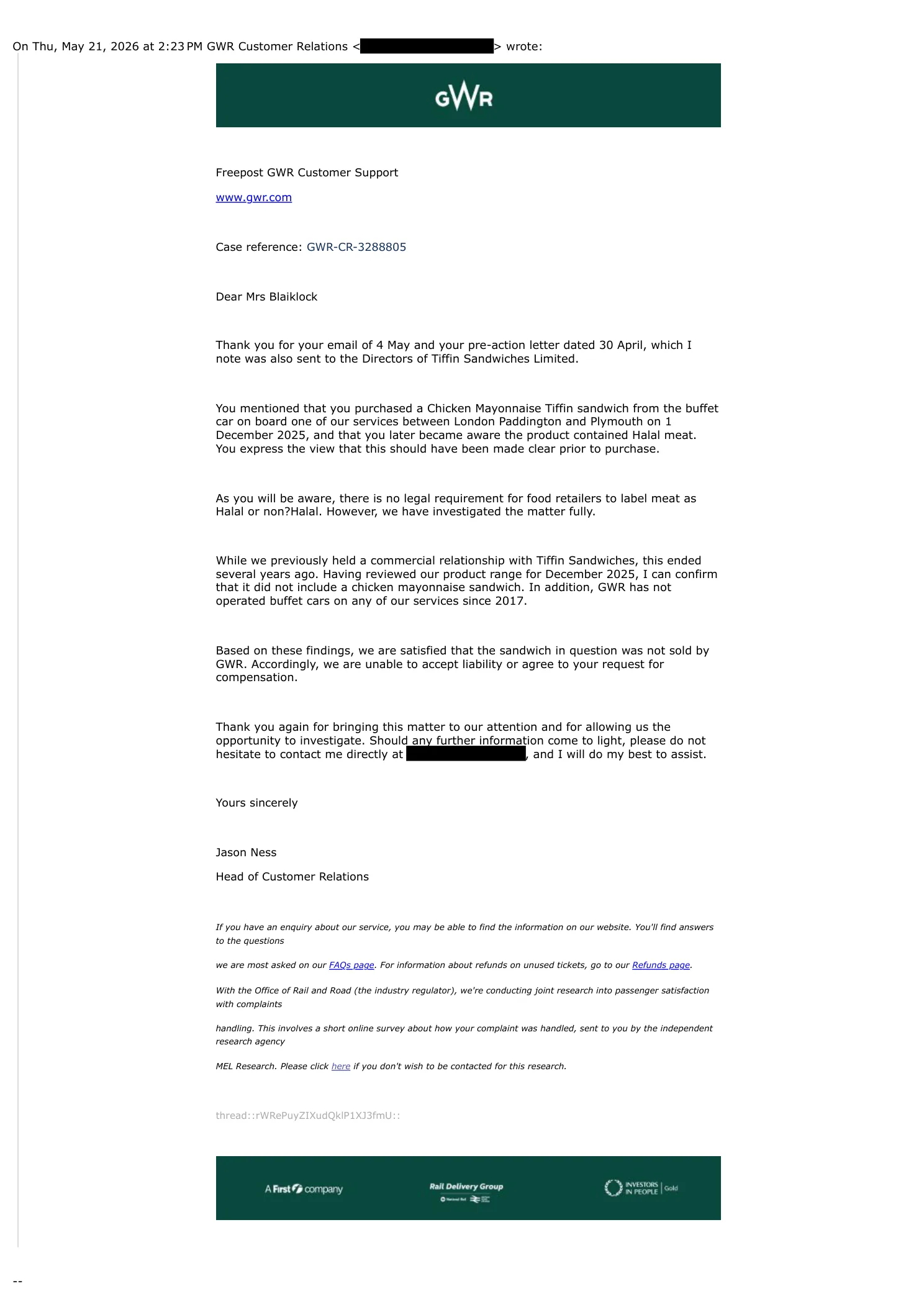
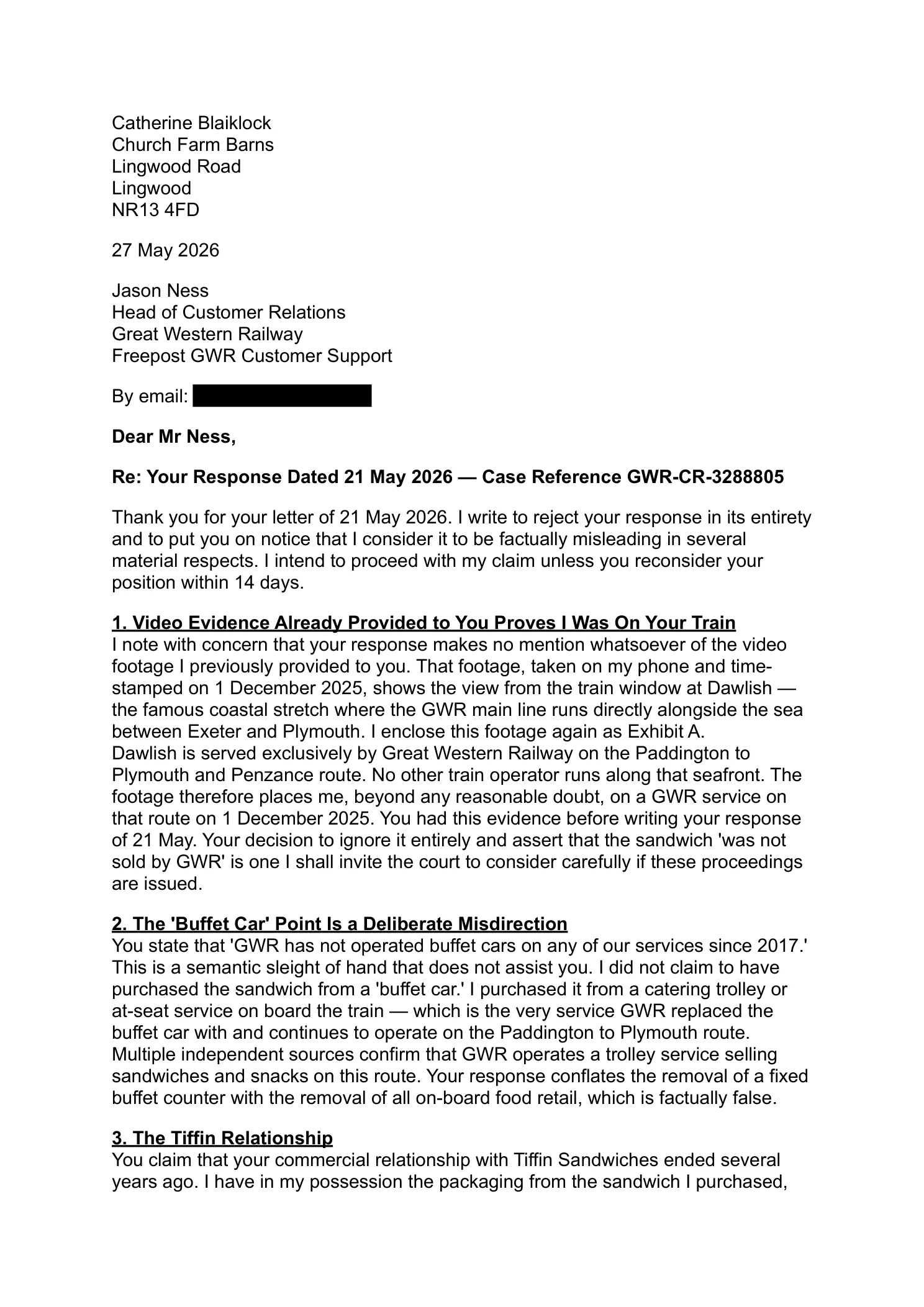
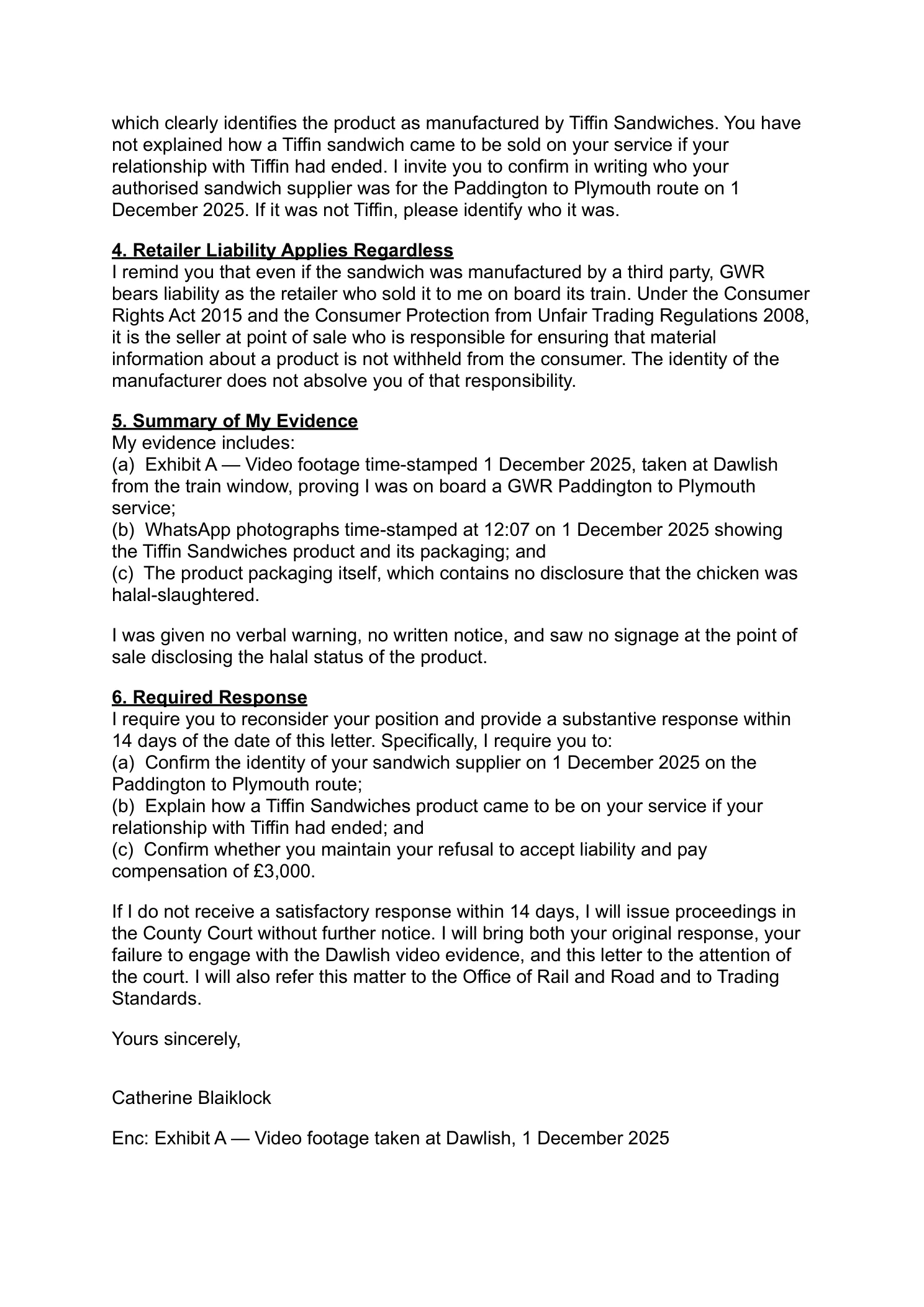
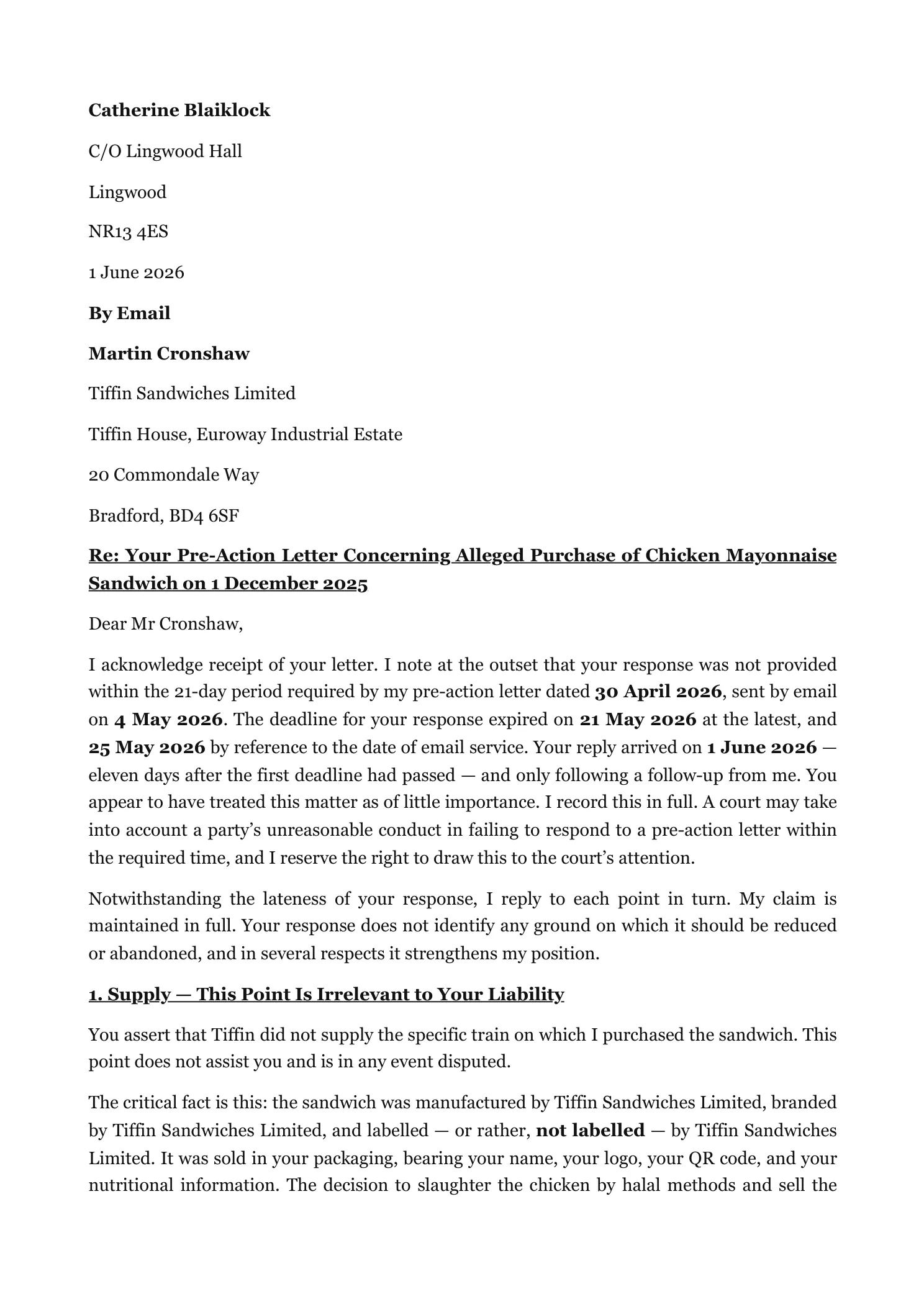
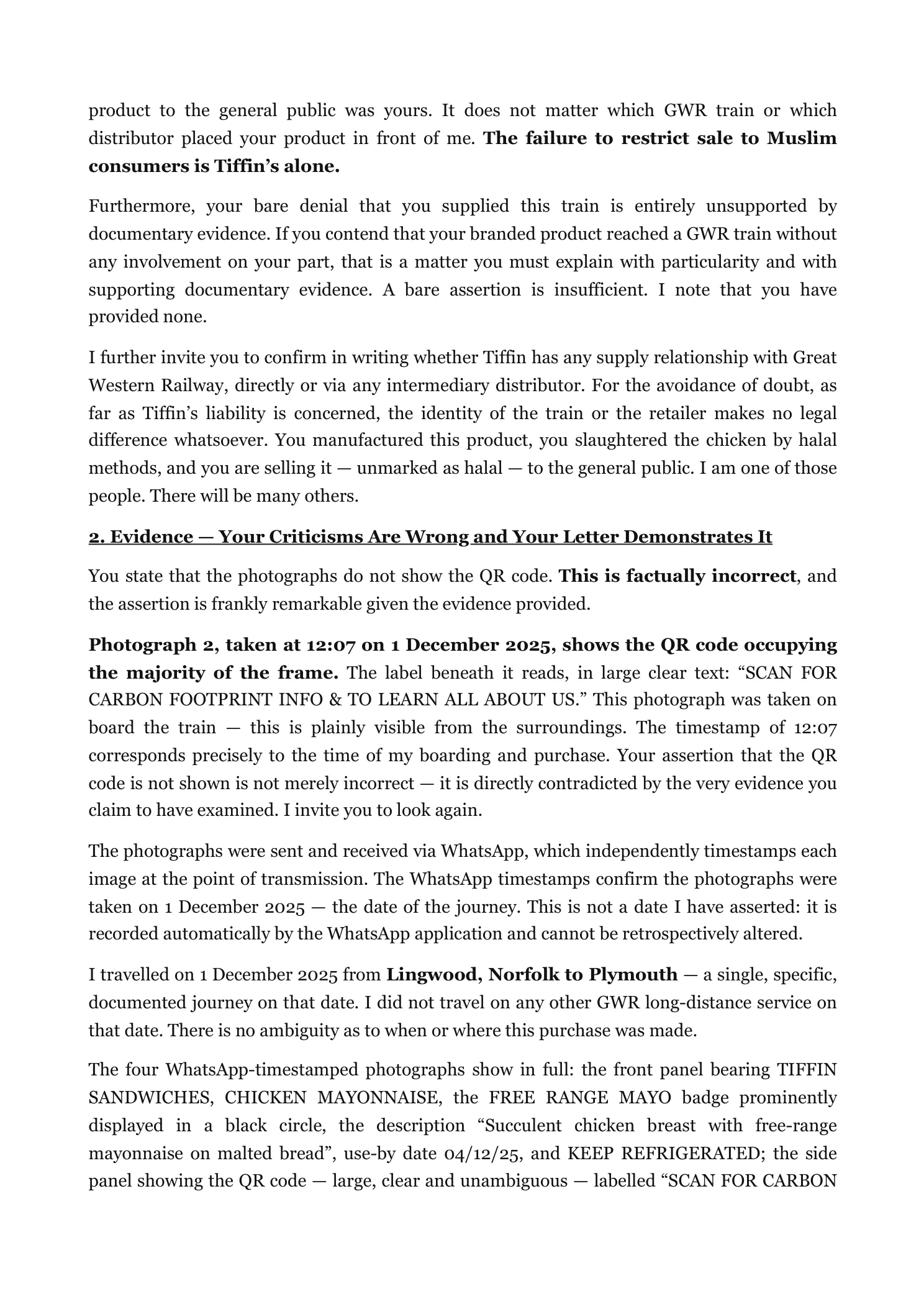
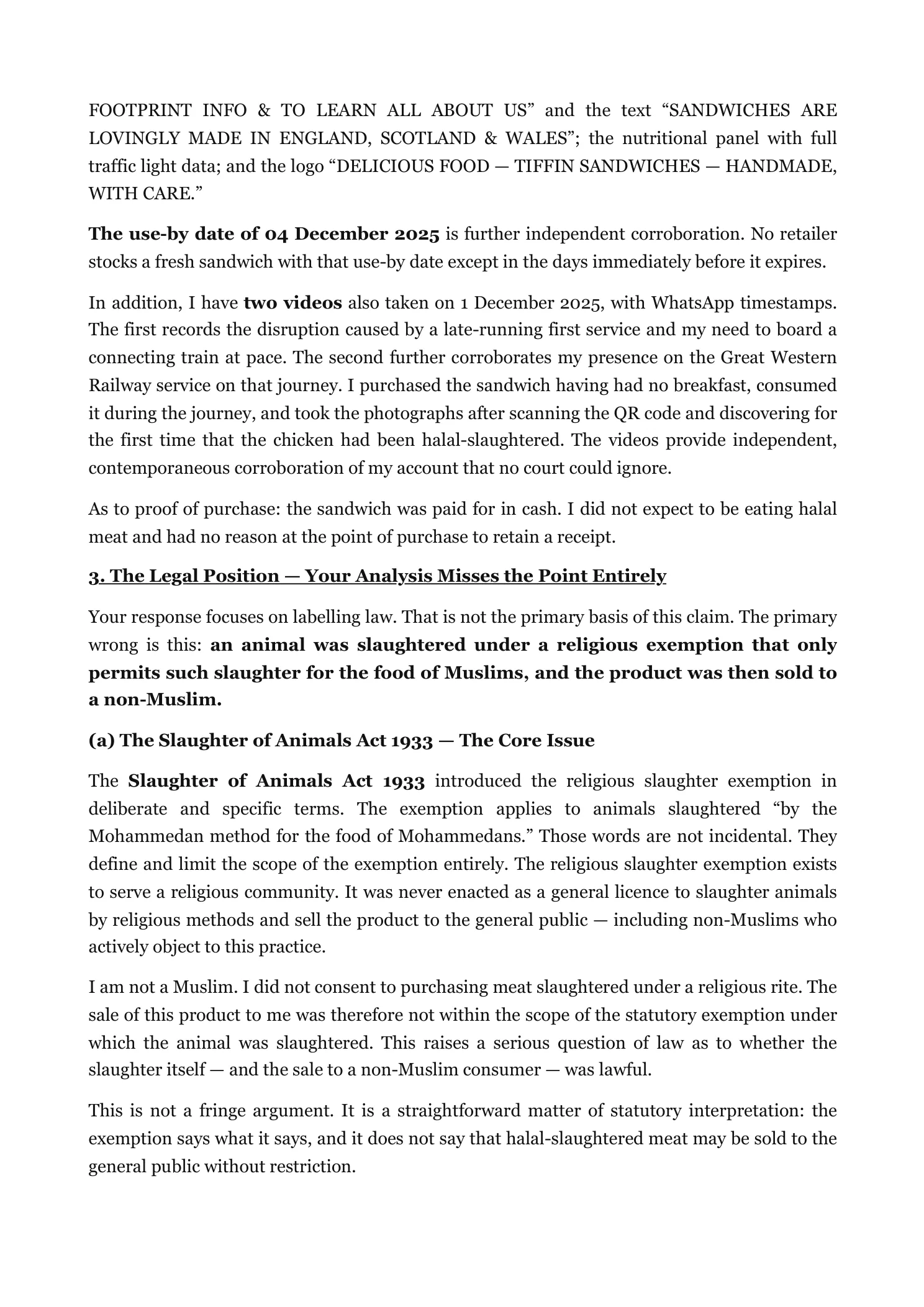
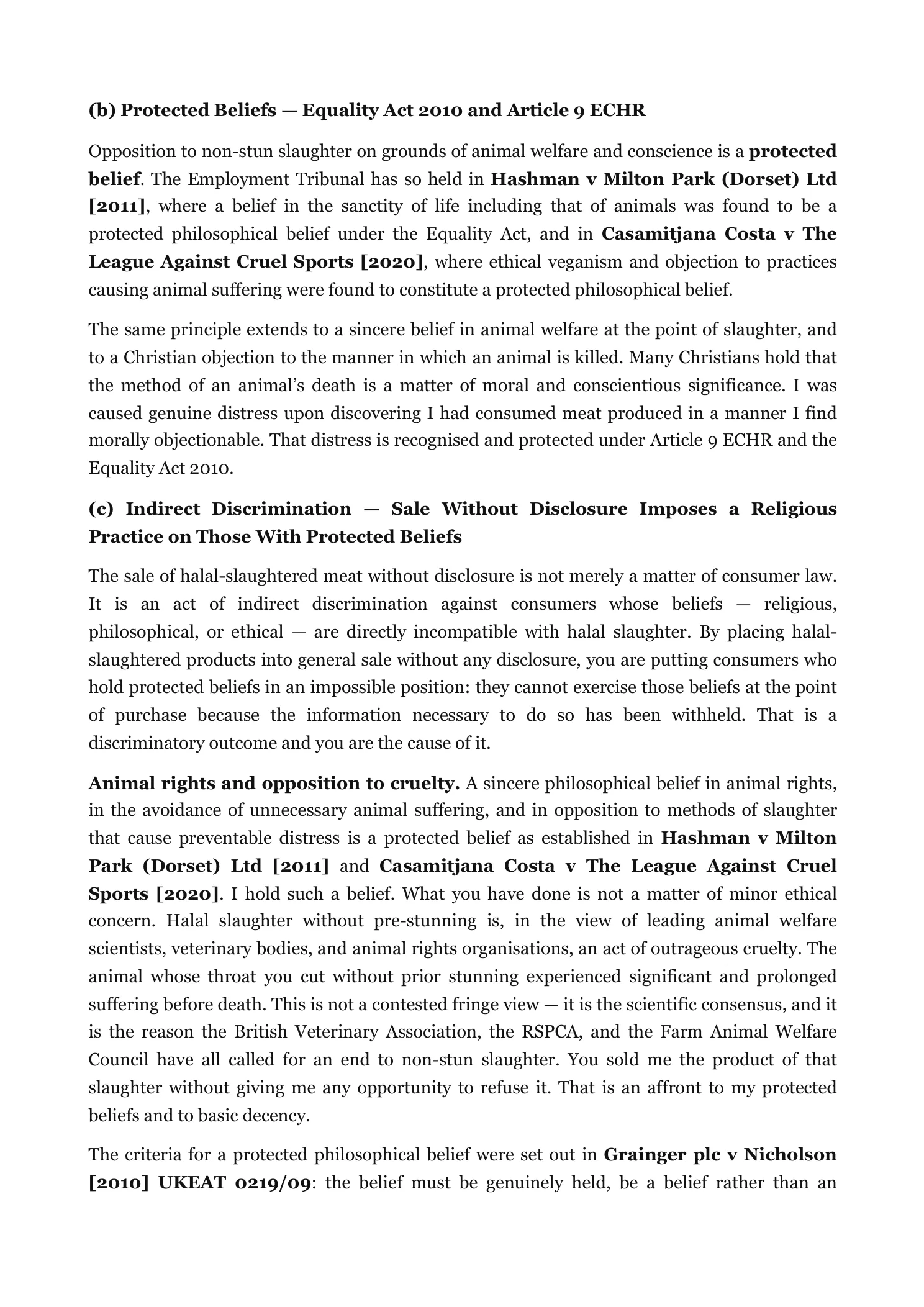
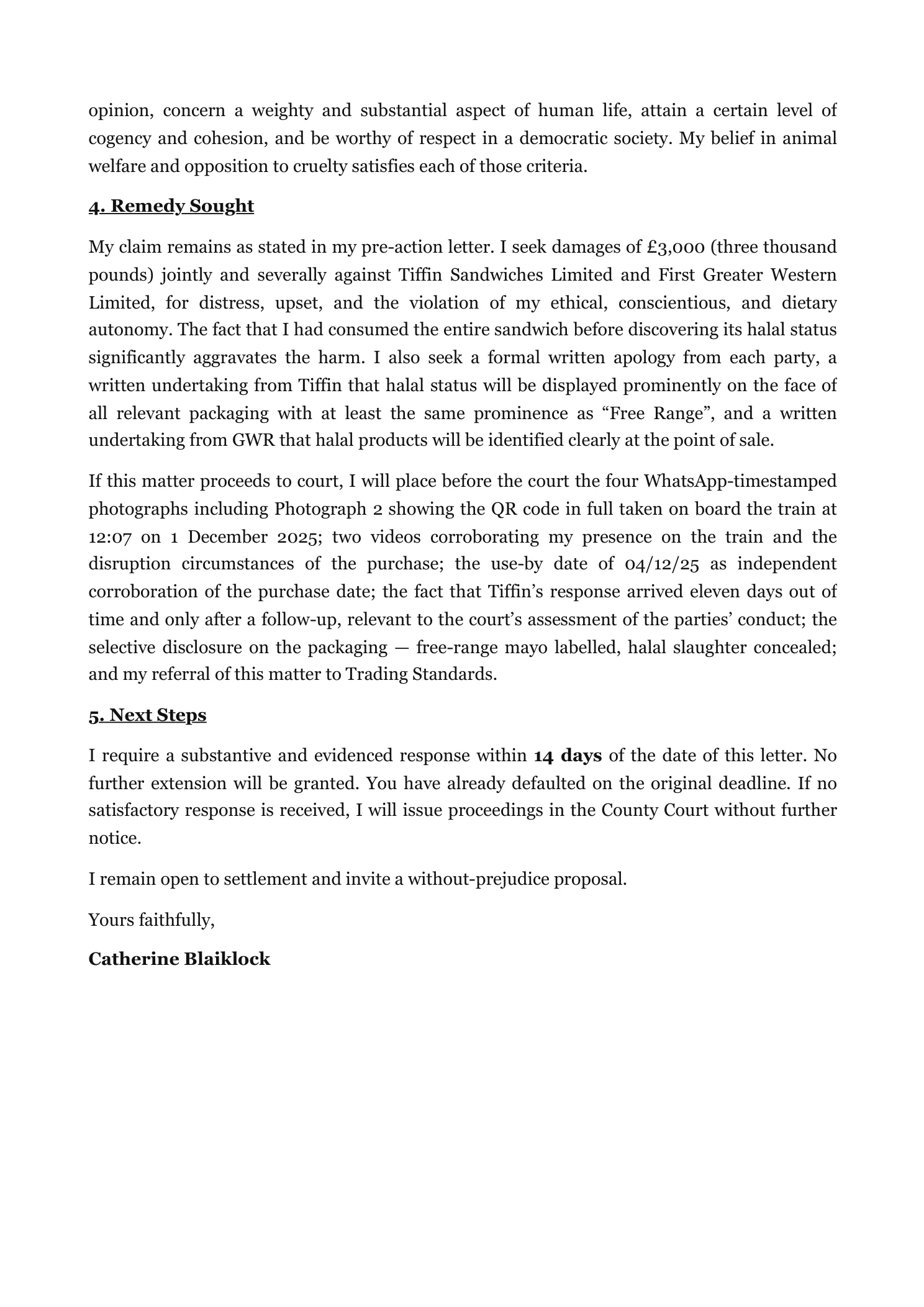
The chicken mayonnaise sandwich served on board Great Western Railway (GWR) was manufactured and branded by Tiffin Sandwiches Limited, and its halal status was hard for passengers to find. GWR's email response and the reply letter sent to GWR are embedded below, followed by the reply to Tiffin Sandwiches' pre-action response.
Great Western Railway
GWR email response
Great Western Railway
Reply letter to GWR
Tiffin Sandwiches Limited
Reply to Tiffin's pre-action response — 1 June 2026
Kensington Palace
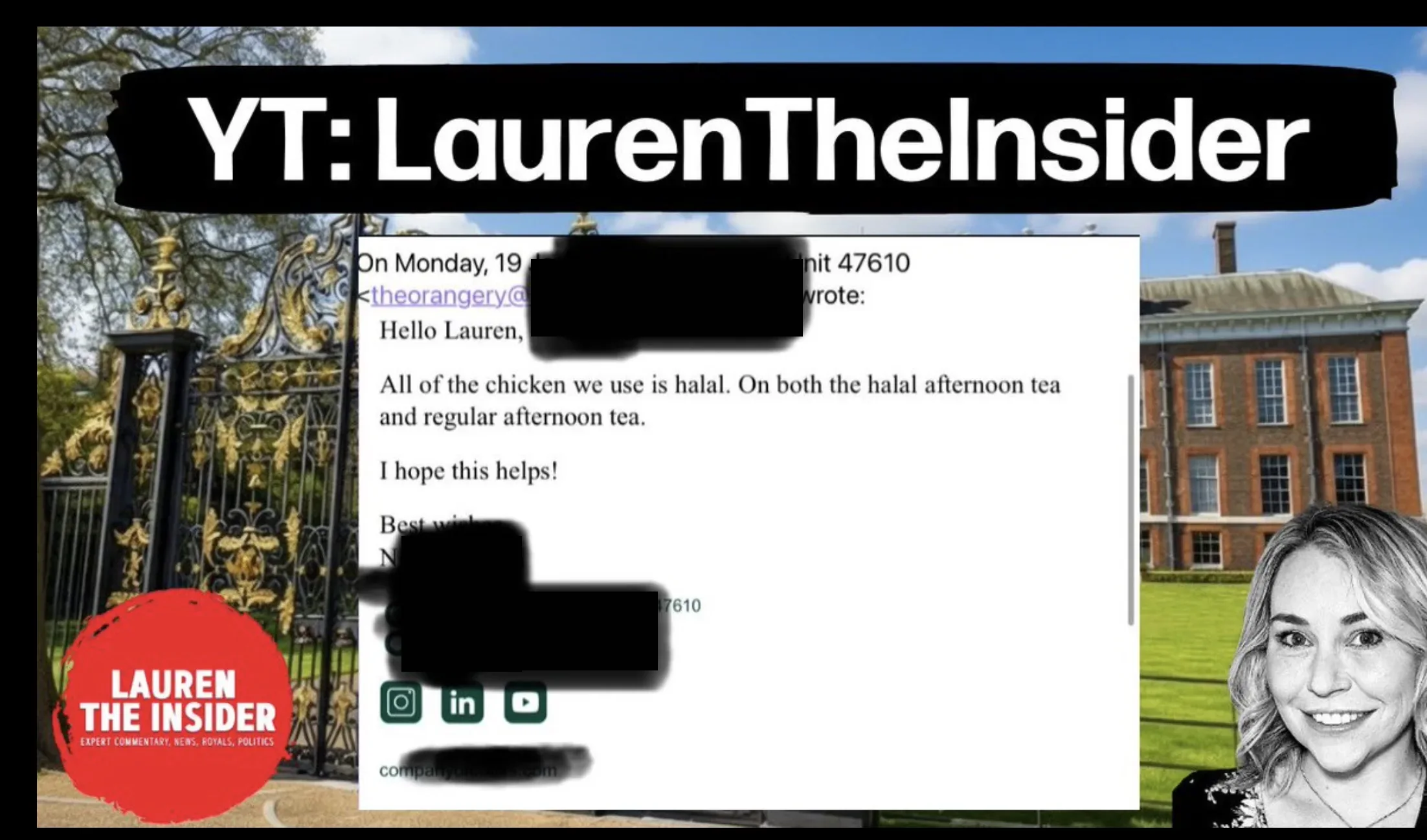
The Orangery at Kensington Palace confirmed by email that the chicken it serves is halal — on both the halal afternoon tea and the regular afternoon tea — without this being indicated to diners. The confirmation is shown below. Correspondence on this is in progress, and the letter will be added here once it has been sent.